

 EN
EN  English
 中文简体
中文简体News

How Do Stainless Steel Hose Clamps Prevent Corrosion?
 2026.06.08
 Industry News
Stainless steel hose clamps prevent corrosion through the inherent electrochemical properties of austenitic stainless steel alloys — primarily the chromium oxide passive film that forms on the surface and continuously self-repairs when exposed to oxygen. Unlike carbon steel clamps that rust progressively in contact with moisture, fuel, chemicals, or road splash, a properly specified corrosion resistant hose clamp made from 304 or 316 stainless steel maintains its structural integrity and clamping force over the full service life of the hose it secures. The direct answer: material selection drives corrosion resistance, and stainless steel is the correct material for any application involving humidity, chemicals, food contact, or outdoor exposure.
This article examines how different clamp types in a comprehensive hose clamp series — including double wire clamps, spring clamps, single ear clamps, double ear clamps, and fuel pipe mini clamps — address corrosion across industrial, automotive, HVAC, food grade, and marine environments. Material grades, design configurations, and application-specific selection criteria are covered in full.
- 1 The Metallurgy of Corrosion Resistance: Why Stainless Steel Works
- 2 Product Types in the Comprehensive Hose Clamp Series: Design and Application
- 3 Industrial Applications: Where Corrosion Resistance Is Non-Negotiable
- 4 Radar Comparison: Clamp Type Performance Across Five Criteria
- 5 Custom and OEM Capabilities: Tailoring Clamps to Specific Requirements
- 6 About Cixi Hengtuo Hardware Co., Ltd.
- 7 Frequently Asked Questions
The Metallurgy of Corrosion Resistance: Why Stainless Steel Works
The corrosion resistance of a stainless steel pipe clamp or hose clamp is not a surface coating that wears off over time — it is a property embedded in the alloy chemistry itself. Stainless steel contains a minimum of 10.5% chromium by mass, which reacts with atmospheric oxygen to form a thin, adherent chromium oxide layer on the metal surface. This passive film is self-healing: if the surface is scratched or abraded, the film reforms spontaneously in the presence of oxygen.
The comprehensive hose clamp series uses stainless steel in both 200 series and 300 series grades. The 300 series — predominantly 304 (18% chromium, 8% nickel) and 316 (with added molybdenum) — offers superior corrosion resistance in chloride-rich environments such as marine applications, chemical processing, and food production. The 200 series substitutes manganese for a portion of the nickel content, delivering good corrosion resistance at reduced material cost, suitable for general industrial and automotive applications where extreme chemical exposure is not a factor.
Carbon steel clamps, by contrast, depend on surface zinc plating or paint coatings for corrosion protection. Once the coating is breached — by mechanical abrasion, vibration wear, or thermal cycling — the underlying steel begins to corrode immediately. In applications involving fuel lines, coolant hoses, or outdoor HVAC ducting, a corroded carbon steel pipe clamp can seize onto the hose, lose clamping force, or fail structurally. A stainless steel clamp eliminates these failure modes by design.
The horizontal bar chart scores corrosion resistance across five hose clamp material grades in mixed industrial environments including moisture, mild chemicals, and temperature cycling. SS 316 achieves a perfect score of 10, reflecting its molybdenum content which provides superior resistance to pitting corrosion in chloride-rich and acidic environments — making it the preferred grade for marine, food processing, and pharmaceutical applications. SS 304 scores 9.2, covering the vast majority of industrial and automotive applications where chloride exposure is limited. The 200 series stainless scores 8.0, suitable for general-purpose industrial use where cost efficiency is a priority. Zinc-plated carbon steel scores only 4.6, reflecting the coating's vulnerability to mechanical damage and the rapid corrosion that follows once the zinc layer is breached. Uncoated carbon steel scores 2.0, confirming it is unsuitable for any application involving moisture, chemicals, or outdoor exposure. This scoring profile explains why specifying the correct stainless steel grade for the application environment is a more durable and cost-effective long-term decision than relying on coated carbon steel alternatives that require periodic replacement.
Product Types in the Comprehensive Hose Clamp Series: Design and Application
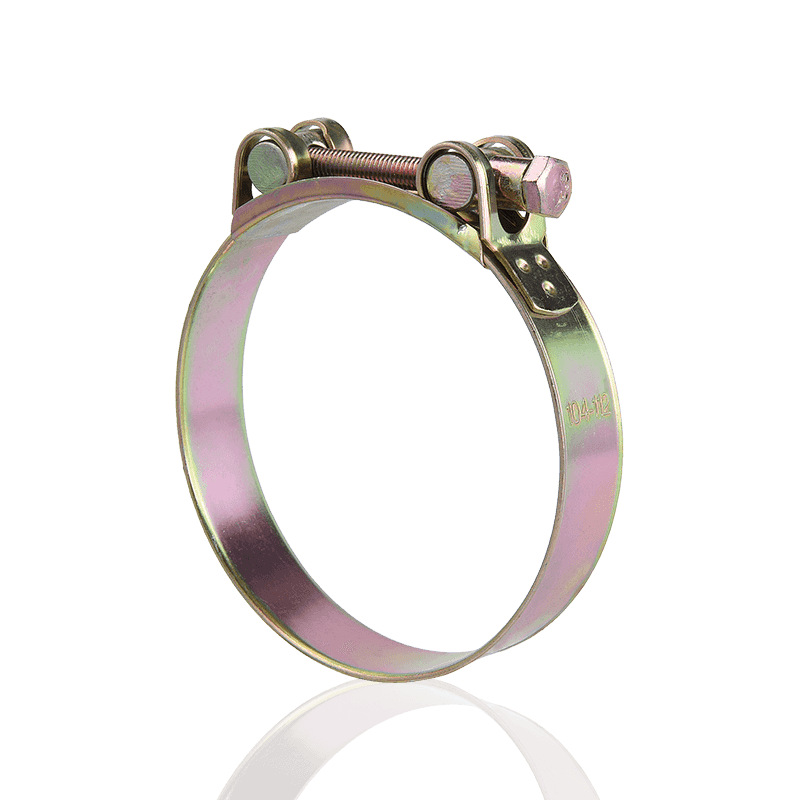
A comprehensive hose clamp series addresses the full range of pipe and hose connection requirements across industries. Each clamp type — double wire, spring band, single ear, double ear, and fuel pipe mini — is engineered for specific installation conditions, hose diameters, pressure ratings, and assembly methods. Selecting the wrong type for an application results in inadequate sealing, hose damage, or premature joint failure.
Double Wire Clamp
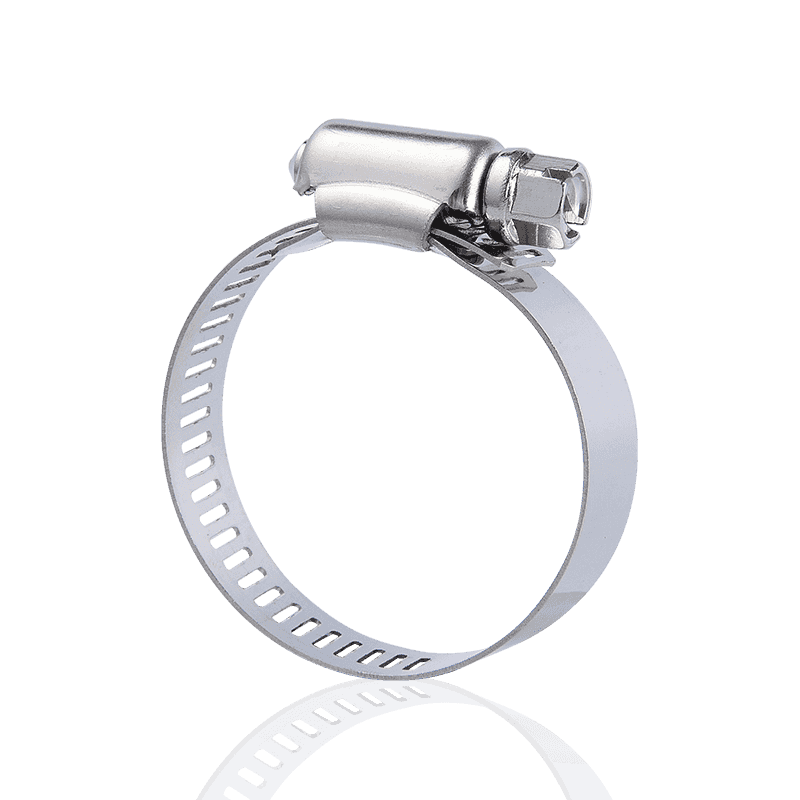
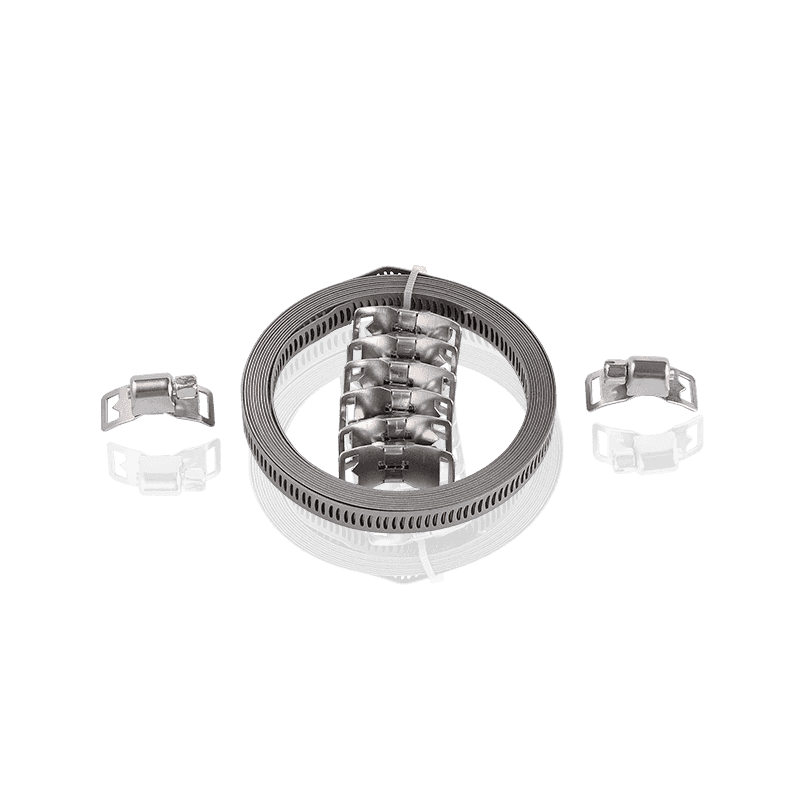
The double wire clamp uses two parallel wire loops to distribute clamping force evenly across the hose circumference. This design reduces the risk of localised hose deformation compared to single-band clamps, making it particularly suitable for thin-walled rubber hoses and silicone hoses used in cooling systems, air intake lines, and low-pressure fluid connections. The double wire construction also provides redundancy — if one wire loop sustains impact damage, the second maintains sealing integrity. Available in stainless steel for corrosion resistance in automotive engine bay environments.
Spring Band Clamp (Japanese Style)
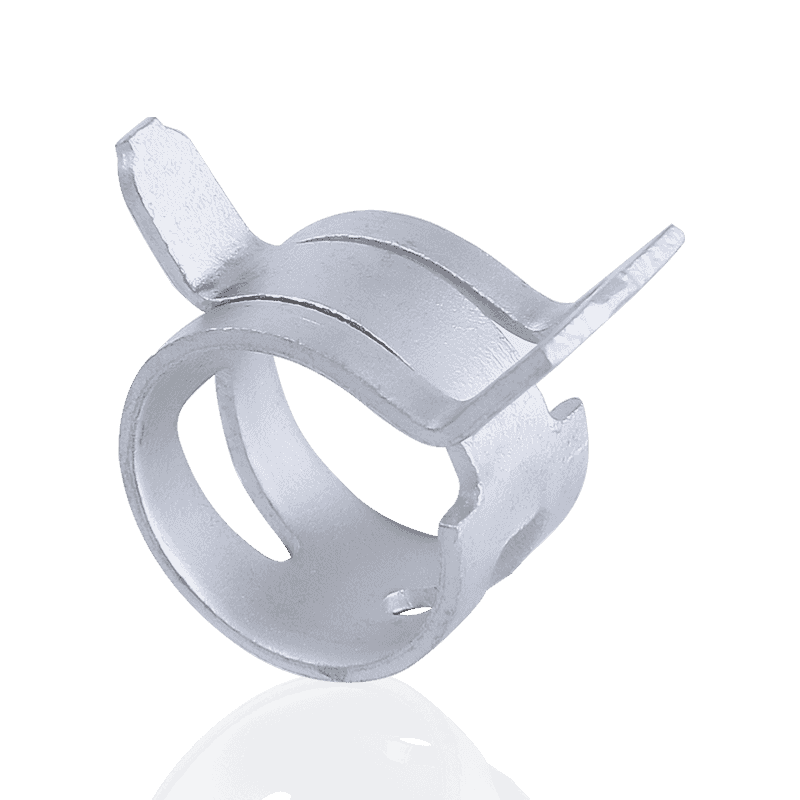
The spring band clamp (Japanese style) is a constant-tension clamp that automatically adjusts clamping force as the hose expands and contracts with temperature changes. Unlike screw-type clamps that can lose tension as hose material creeps under sustained compression, the spring clamp maintains consistent radial force throughout thermal cycling. This property makes it the preferred choice for automotive cooling hoses, radiator connections, and HVAC ducting applications where temperature differentials are significant and re-torquing is impractical. The spring band clamp is installed using specialised pliers and is not adjustable once installed — providing tamper-evidence as an additional benefit.
Single Ear Stepless Clamp
The single ear clamp (stepless design) is crimped with a purpose tool to provide a permanent, tamper-proof connection with a 360° contact area. The stepless band eliminates the inner surface discontinuities that conventional screw-type clamps introduce, making it the preferred choice for fuel line hose clamps, brake fluid lines, and refrigerant hoses where any internal turbulence or leak path is unacceptable. The single ear design is compact and low-profile, fitting in confined spaces within engine bays and instrument panels where larger clamp bodies would obstruct adjacent components.
Double Ear Clamp
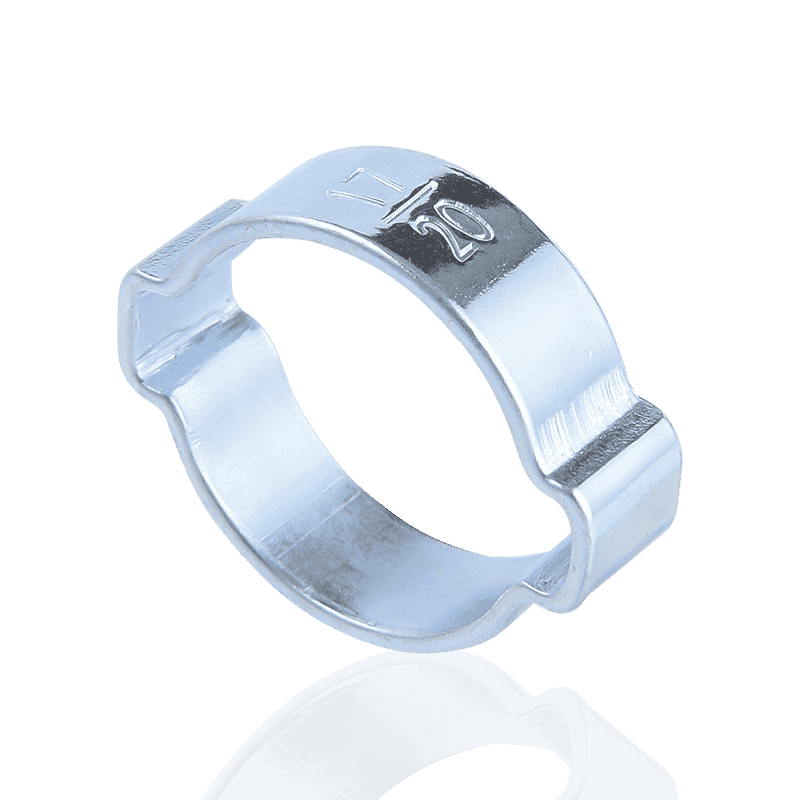
The double ear clamp provides higher retention force than the single ear variant by crimping two deformation points rather than one, distributing the securing load across a wider band length. This makes it suitable for higher-pressure applications and for hoses subject to axial pull-out forces — such as push-on hose fittings in hydraulic circuits, compressed air lines, and industrial fluid transfer systems. The double ear design is available in both stainless steel and carbon steel, with stainless steel specified for all applications involving corrosive fluids or outdoor installation.
Fuel Pipe Mini Hose Clamp
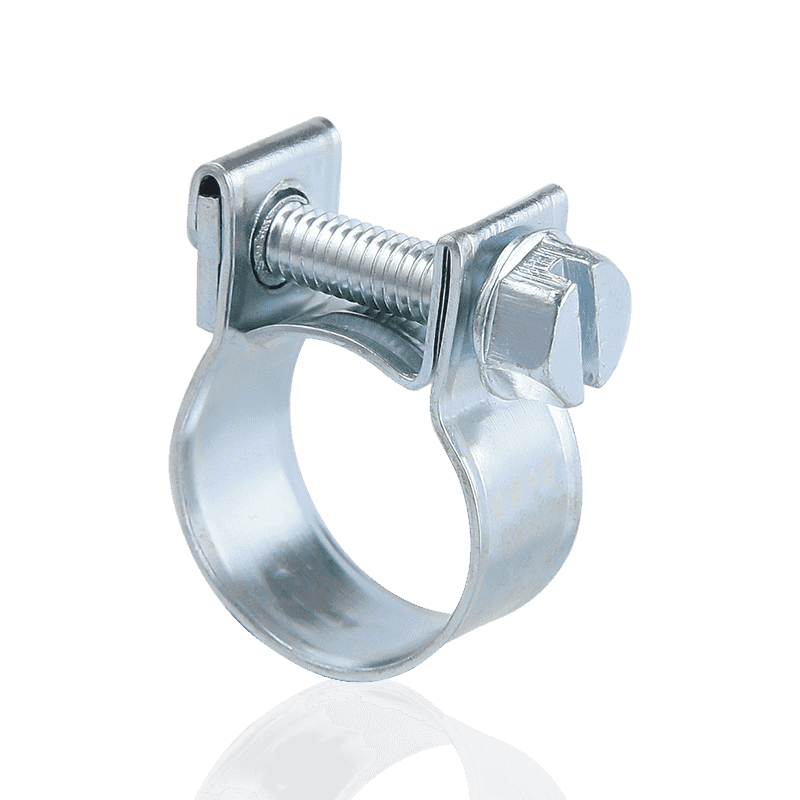
The fuel pipe mini clamp is engineered for the small-diameter, high-cleanliness requirements of fuel line hose clamp applications in automotive and small engine contexts. The compact band width and precisely controlled clamping diameter ensure secure retention on 4–12mm fuel hoses without cutting into the hose wall — a failure mode that creates fuel leaks and fire risk. The stainless steel construction resists fuel, oil, and exhaust-area heat without degradation over the service life of the vehicle.
| Clamp Type | Installation Method | Key Feature | Primary Applications | Adjustable |
|---|---|---|---|---|
| Double Wire Clamp | Screw / manual | Even force distribution via dual wire loops | Cooling systems, air intake, low-pressure fluid | Yes |
| Spring Band Clamp | Pliers (one-time) | Constant tension through thermal cycling | Automotive radiator, HVAC ducting | No |
| Single Ear Stepless | Crimping tool | 360° contact, no inner protrusion | Fuel lines, brake fluid, refrigerant hose | No |
| Double Ear Clamp | Crimping tool | High retention force, dual crimp points | Hydraulics, compressed air, industrial fluid | No |
| Fuel Pipe Mini | Crimping tool | Compact, precise diameter, no hose cutting | Automotive fuel lines, small engines | No |
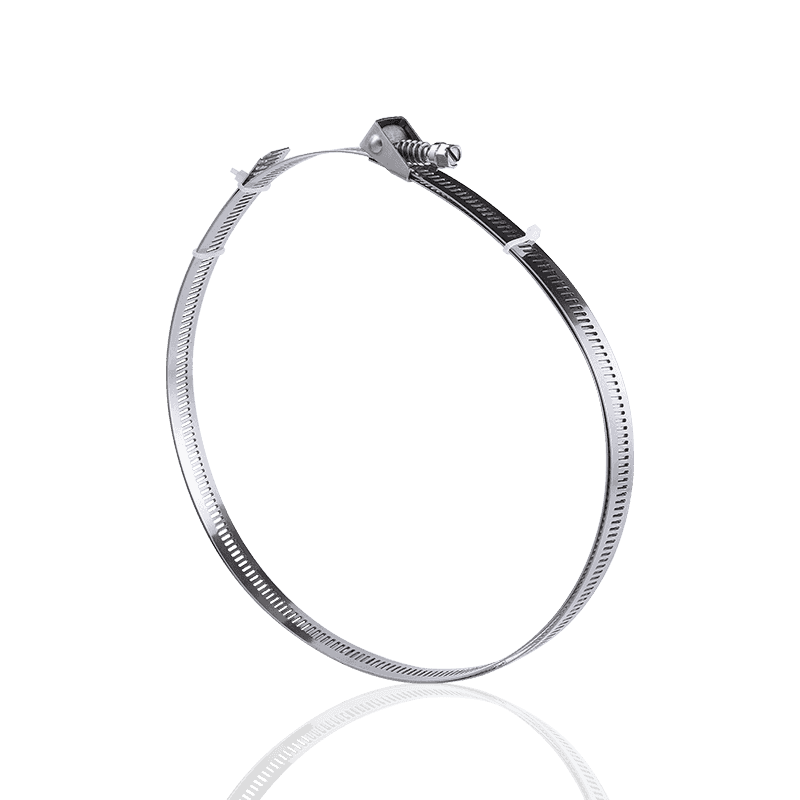
| Rubber Strip Clamp | Manual / screw | Cushioned grip, vibration-damping | Vibration-sensitive pipe routing, insulated lines | Yes |
Industrial Applications: Where Corrosion Resistance Is Non-Negotiable
The applications for industrial hose clamps span environments where corrosion failure is not merely an inconvenience but a safety or compliance event. In food processing, a corroded clamp contaminates the product stream. In chemical plants, a corroded fuel or chemical hose clamp can cause a leak that triggers regulatory action or environmental liability. In marine and offshore settings, saltwater chloride concentration accelerates corrosion to the point where standard zinc-plated clamps may fail within months.
- Automotive and Transportation: Automotive hose clamps must withstand engine bay temperatures up to 150°C, road splash containing road salt and de-icers, and vibration loads that fatigue clamp band material over time. Stainless steel grades with appropriate band thickness (0.6–0.8mm) for the clamp size provide the thermal and mechanical durability required.
- HVAC and Ventilation: HVAC hose clamps and ventilation hose clamps secure flexible ducting in environments where condensation, humidity, and varying temperatures create ideal conditions for corrosion. Stainless steel clamps in HVAC applications eliminate the annual replacement cycle that galvanised clamps typically require in high-humidity buildings.
- Food and Pharmaceutical: Food grade hose clamps must meet hygienic design standards — smooth inner surface, no crevices that harbour bacteria, and material that does not react with food acids, cleaning chemicals, or sanitisers. 316L stainless steel satisfies all three requirements and is the standard material specification in food processing plant engineering standards.
- Agriculture and Irrigation: Sprinkler irrigation systems require clamps that resist fertiliser solutions, pesticide residues, and UV exposure in outdoor installations. Stainless steel adjustable hose clamps provide the combination of field-adjustability and corrosion resistance needed for irrigation hose connections that may not be replaced for multiple growing seasons.
- Marine and Offshore: Marine-grade SS 316 clamps are essential for seawater cooling systems, bilge pump hoses, and deck hardware. The molybdenum content in 316 stainless specifically addresses chloride pitting — the mechanism by which seawater attacks standard 304 stainless.
The line chart tracks clamping force retention over an 8-year service period for a stainless steel hose clamp versus a zinc-plated carbon steel clamp in outdoor industrial conditions. The stainless steel clamp (solid dark green line) retains approximately 96% of its original clamping force at year 8 — a decline so gradual as to be operationally insignificant for virtually all applications. The zinc-plated carbon steel clamp (dashed light green line) tells a dramatically different story: force retention drops to 88% by year 1 as the zinc coating begins to degrade under outdoor UV and moisture exposure, then accelerates to 72% by year 2 as base metal corrosion begins to undermine band thickness and screw thread integrity. By year 5, the carbon steel clamp retains only 38% of its original clamping force — well below the threshold for reliable sealing on any pressurised hose connection. By year 8, it has effectively failed as a functional fastener. This data quantifies why specifying a heavy duty hose clamp in stainless steel for long-service applications is not a premium choice but a lifecycle cost decision: the stainless clamp installed once outlasts three to four replacement cycles of carbon steel, with no labour or downtime cost for intermediate replacements.
Radar Comparison: Clamp Type Performance Across Five Criteria
The radar chart compares three key clamp types across six performance dimensions: sealing integrity, retention force, thermal stability, ease of installation, corrosion resistance, and space efficiency. The single ear stepless clamp (dark solid polygon) leads on sealing integrity and space efficiency — both scoring 9.5 — reflecting its 360° band contact and compact profile, making it the top choice for fuel line hose clamps and brake circuits where space is tight and leak-free sealing is mandatory. The double ear clamp (dashed medium green polygon) leads on retention force at 9.5, confirming its suitability for higher-pressure applications where axial pull-out resistance is the primary selection criterion. The spring band clamp (dotted light green polygon) leads on thermal stability at 9.5, extending furthest on that axis due to its constant-tension spring design that maintains clamping force through repeated thermal expansion and contraction cycles. All three clamp types score identically on corrosion resistance when manufactured in stainless steel — confirming that the material grade, not the clamp design, determines corrosion performance, while clamp design determines the mechanical performance profile. This radar view helps specifiers match clamp type to their specific combination of installation environment, pressure, temperature, and space constraints.
Custom and OEM Capabilities: Tailoring Clamps to Specific Requirements
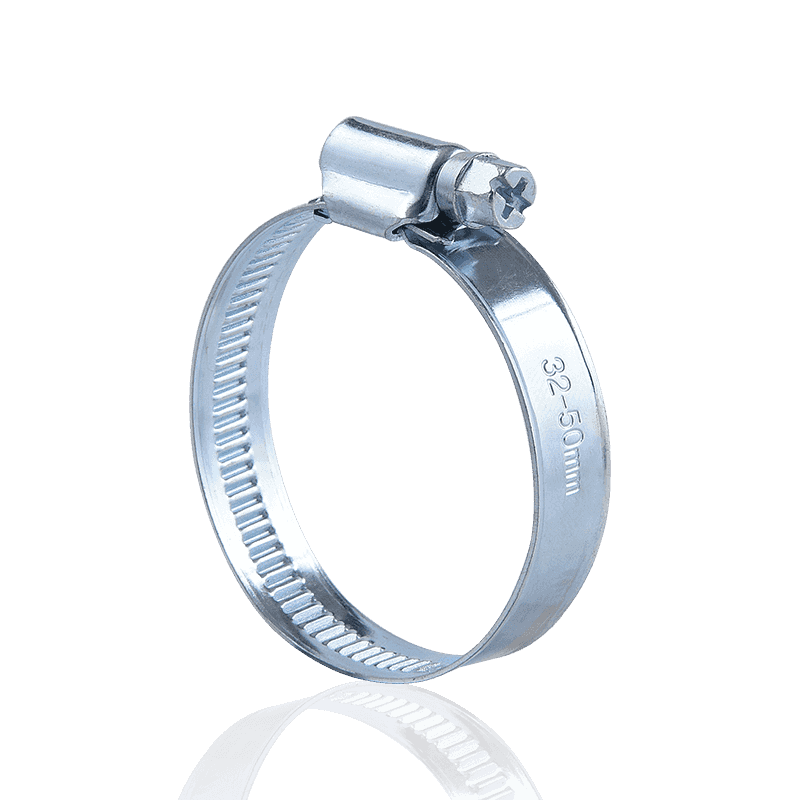
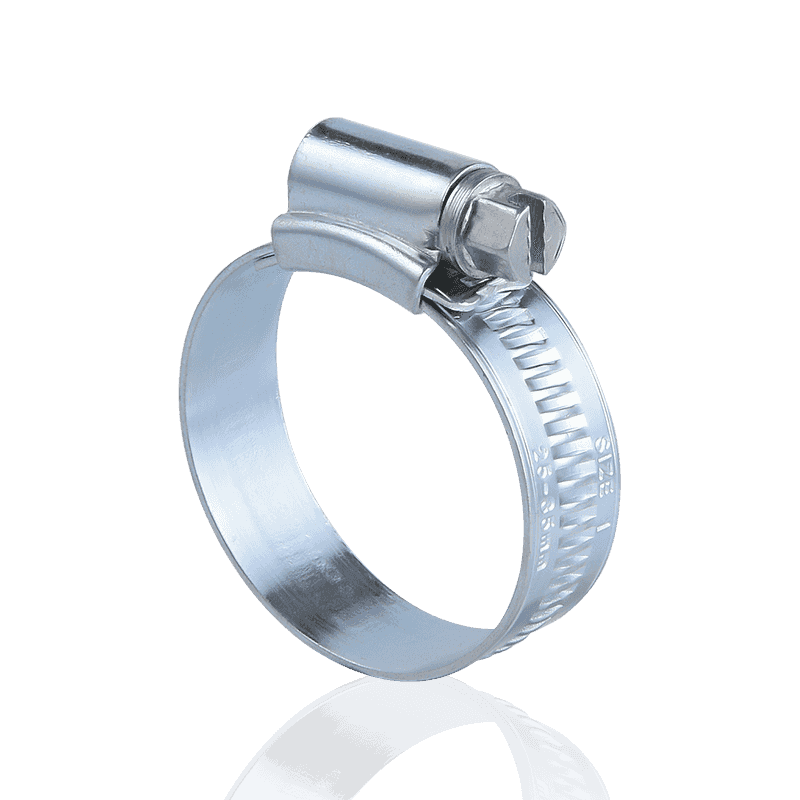
Standard catalogue clamps address the majority of applications, but certain industrial processes, OEM assembly lines, and specialist vehicle platforms require custom hose clamp supplier capabilities — non-standard diameters, custom band widths, proprietary bolt head configurations, or application-specific material certifications. The factory's production capability spans British style, German style, American style, strong style, and single ear clamps, with the capacity to produce custom specifications across all these design families.
For OEM automotive assembly applications, automotive clamp supplier relationships typically require specific torque-to-clamp-diameter specifications, traceability documentation, and lot-by-lot dimensional inspection reports. For food and pharmaceutical applications, food grade hose clamp orders may require material test certificates (MTCs) confirming 316L stainless steel composition, surface roughness documentation (Ra values), and compliance with relevant food contact material regulations in the destination market. All of these customisation and documentation requirements are accommodatable within the factory's quality management framework.
The annual production capacity of 30 million clamps across all series provides the scale necessary for high-volume OEM supply without compromising delivery reliability. The factory's location in Cixi, Zhejiang — adjacent to Beilun International Ship Terminal — enables efficient container loading and short transit times to port, supporting just-in-time delivery commitments for international customers.
About Cixi Hengtuo Hardware Co., Ltd.
Cixi Hengtuo Hardware Co., Ltd. is a professional hose clamp manufacturer established in 2005 in Cixi City, Zhejiang Province, China. The factory currently employs nearly 100 staff and produces an annual volume of 30 million hose clamps across a comprehensive range of types and sizes. The company is located with excellent logistical access — adjacent to Beilun International Ship Terminal to the east, with convenient connections to Hangzhou Bay Bridge to the north, facilitating fast export shipment to global customers.
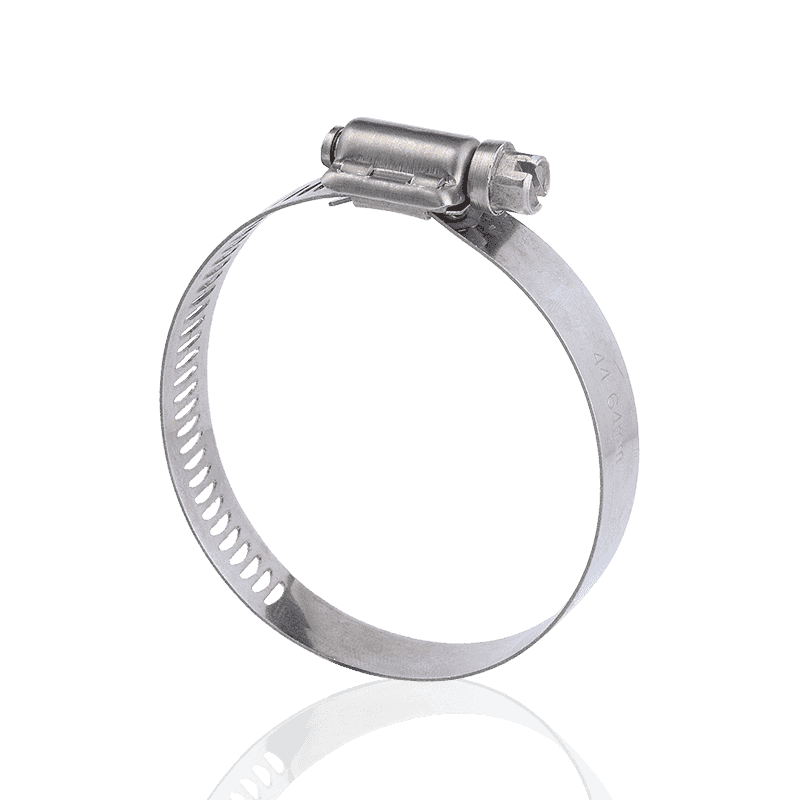
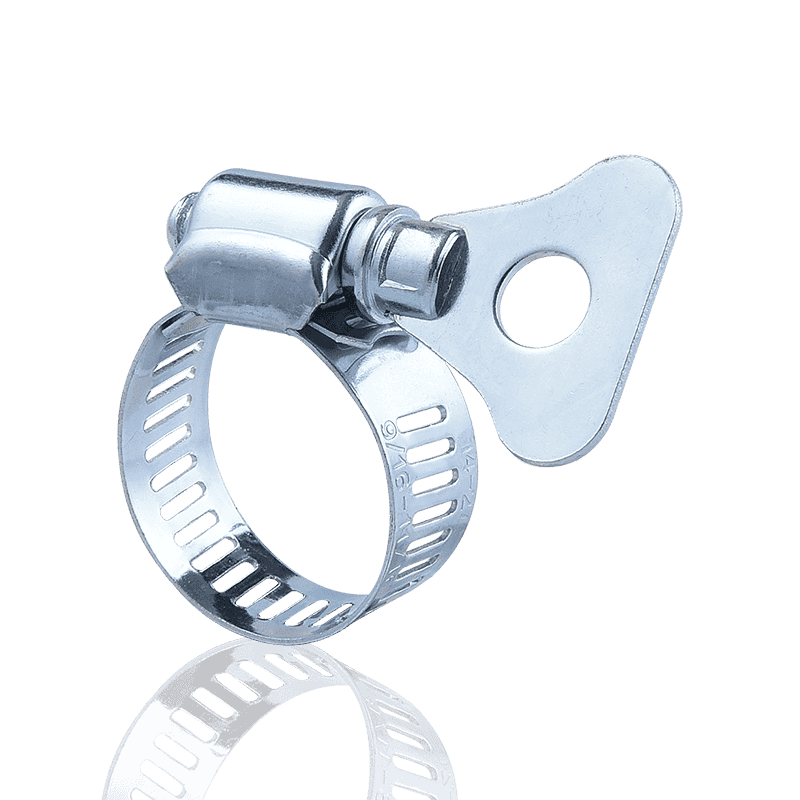
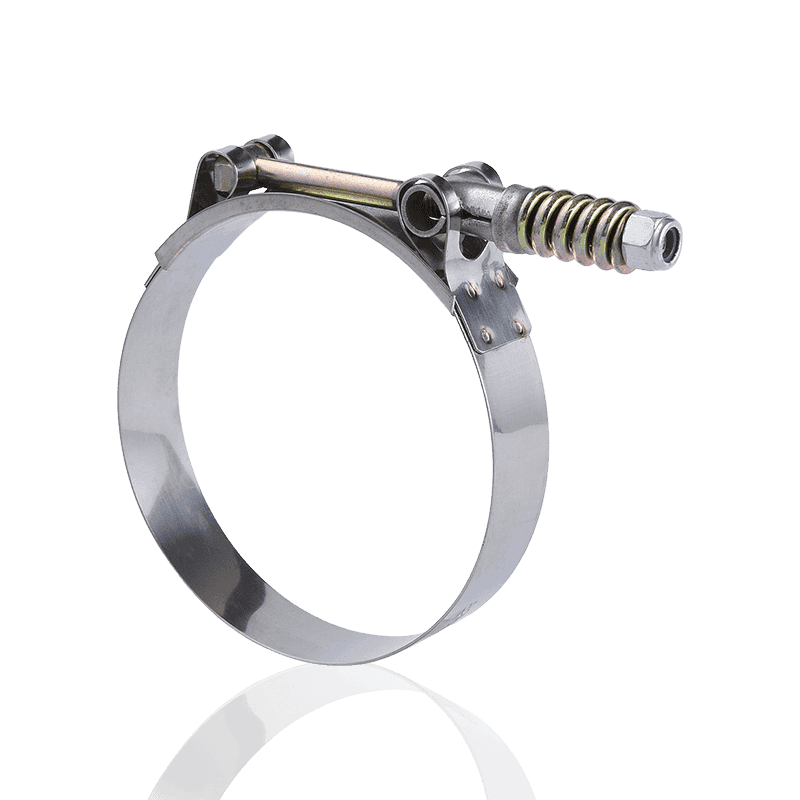
The product range spans British style, German style, American style, strong style, and single ear clamps, all available in carbon steel and stainless steel (200 and 300 series) to suit different application and budget requirements. All products are produced with strong resistance, high-pressure resistance, and corrosion resistance, meeting the application requirements of automotive, agricultural, marine, industrial, and building infrastructure sectors. Custom specifications and OEM production are available. The company operates under the long-standing philosophy of "quality, fair price" and has built a strong export reputation across domestic and international markets.
Frequently Asked Questions

The company strives for excellence in every aspect of production, sales, and after-sales, ensuring customer satisfaction is the unchanging purpose of the enterprise!
Quick links
Product links
Contact Us
-
Address:222 Zhouhu Road, Zhouxiang Town, Cixi City, Zhejiang Province, China
-
Phone: +86-13736108443
-
Tel: +86-574-63441573
-
Fax: +86-574-63452355
-
E-mail: [email protected]
Copyright ©Cixi Hengtuo Hardware Co., Ltd. Rights Reserved. Wholesale Hose Clamp Manufacturer China Hose Clamp Factory
