

 EN
EN  English
 中文简体
中文简体News

What is a hose clamp
 2026.07.27
 Industry News
- 1 What Is a Hose Clamp?
- 2 Main Types of Hose Clamps and How They Differ
- 3 Hose Clamp Materials and Corrosion Resistance
- 4 Comparing Clamp Types Across Key Performance Factors
- 5 Hose Clamp Structure: A Labeled Schematic
- 6 How to Choose the Right Hose Clamp Size
- 7 Industry Standards Relevant to Hose Clamps
- 8 Typical Hose Clamp Applications by Industry
- 9 Installation Tips and Common Mistakes
- 10 About Cixi Hengtuo Hardware Co., Ltd.
- 11 Maintenance and Replacement Guidelines
- 12 Frequently Asked Questions
- 12.1 Q1: What is the difference between a British style and an American style hose clamp?
- 12.2 Q2: Can a single ear clamp be reused after removal?
- 12.3 Q3: Why does hose clamp material grade matter for marine use?
- 12.4 Q4: How do I know what size hose clamp to order?
- 12.5 Q5: Can hose clamps be customized for non-standard hose diameters?
What Is a Hose Clamp?
A hose clamp is a mechanical fastening device used to attach and seal a flexible hose onto a fitting, pipe, or nipple, preventing leaks of liquids, gases, oil, or fuel under pressure or vibration. Most hose clamps work on a simple principle: a metal band wraps around the hose, and a screw, worm gear, or ear-crimping mechanism tightens the band to compress the hose evenly against the fitting underneath. This basic design has remained largely unchanged for decades because it reliably solves a very specific engineering problem: joining a soft, flexible material to a rigid one without a permanent weld or bond.
Hose clamps are used across a wide range of industries, including automotive cooling and fuel systems, marine plumbing, industrial pneumatic and hydraulic lines, agricultural irrigation, and building drainage systems. An adjustable hose clamp can typically be reused, resized within a range, and installed with common hand tools, which is why it remains one of the most common connecting accessories in mechanical assembly work. This article explains how different hose clamp types work, how to choose the right size and material, and what standards and testing practices are relevant to reliable performance.
Main Types of Hose Clamps and How They Differ
There is no single universal hose clamp design. Instead, several regional standards evolved to fit different manufacturing traditions, hose diameters, and tightening tools. Understanding these differences is useful when specifying a clamp for a new application or replacing an existing part.
British Style (Worm Drive) Clamps
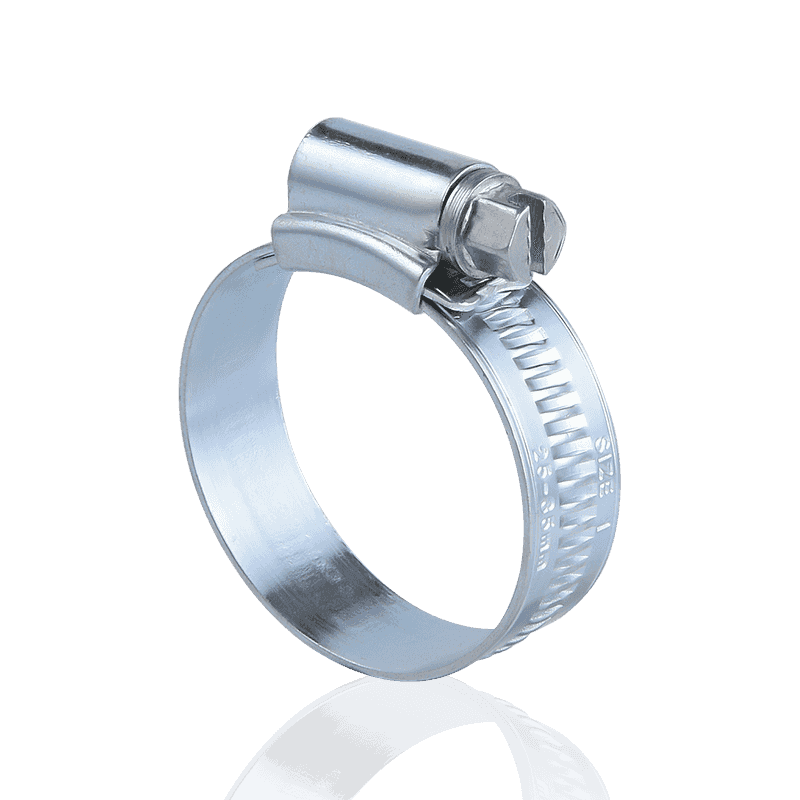
The British style, also called a standard worm drive clamp, uses a continuous perforated band engaged by a worm screw housed in a stamped or welded housing. Turning the screw draws the band tighter in small, even increments. This style is widely used because it is inexpensive to produce, easy to install with a flat or Phillips screwdriver, and adjustable across a moderate diameter range with a single clamp size.
German Style (Mini) Clamps
The German or "mini" style uses a narrower band and a more compact housing than the British style, which reduces weight and material use while still providing dependable clamping force for lighter-duty hose connections. It is commonly specified in automotive fuel and coolant lines where space around the hose fitting is limited.
American Style (Heavy Duty) Clamps
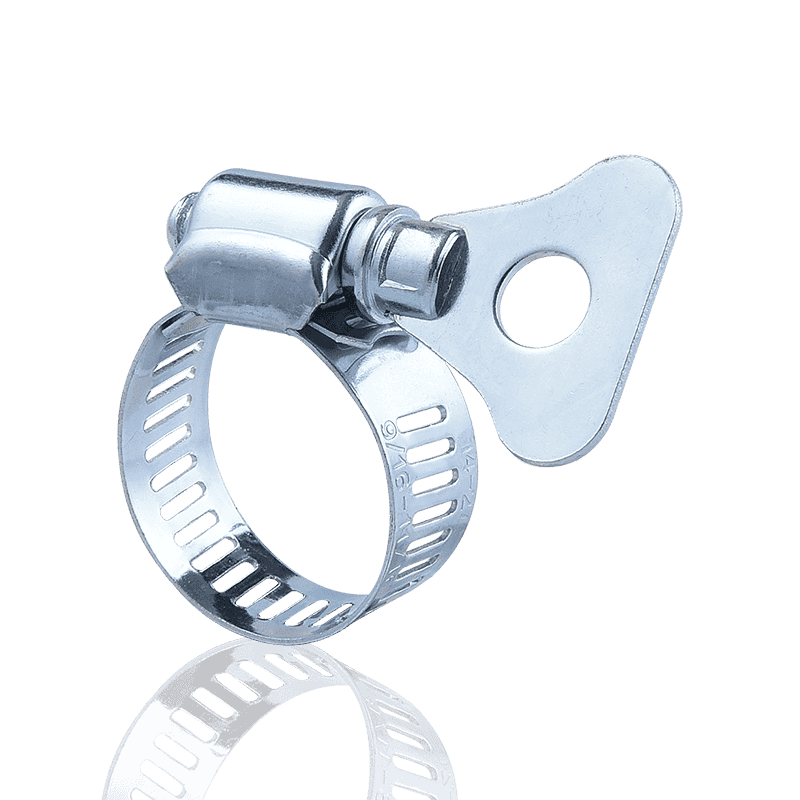
American style clamps generally use a thicker band and a reinforced housing designed for higher torque tightening and higher clamping pressure. They are often selected for larger diameter hoses or for connections that experience repeated vibration, such as engine bays, marine engine compartments, and off-road equipment.
Strong (Extra Heavy Duty) Clamps
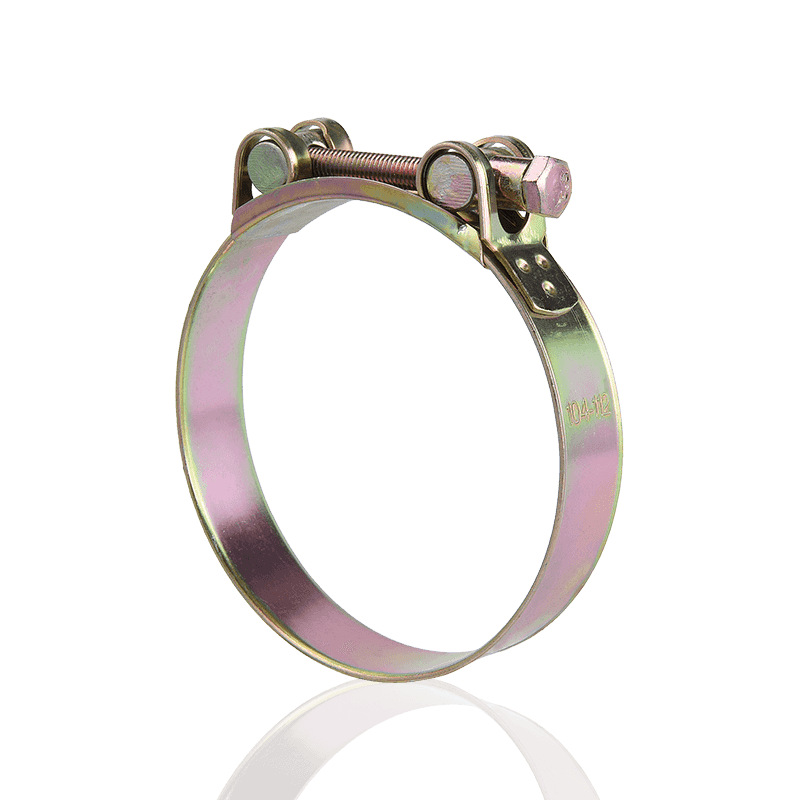
Strong series clamps combine a wider band with a higher torque housing for demanding applications such as large-diameter industrial hoses, turbo charge piping, and heavy vibration environments. These clamps prioritize maximum holding force over compact size.
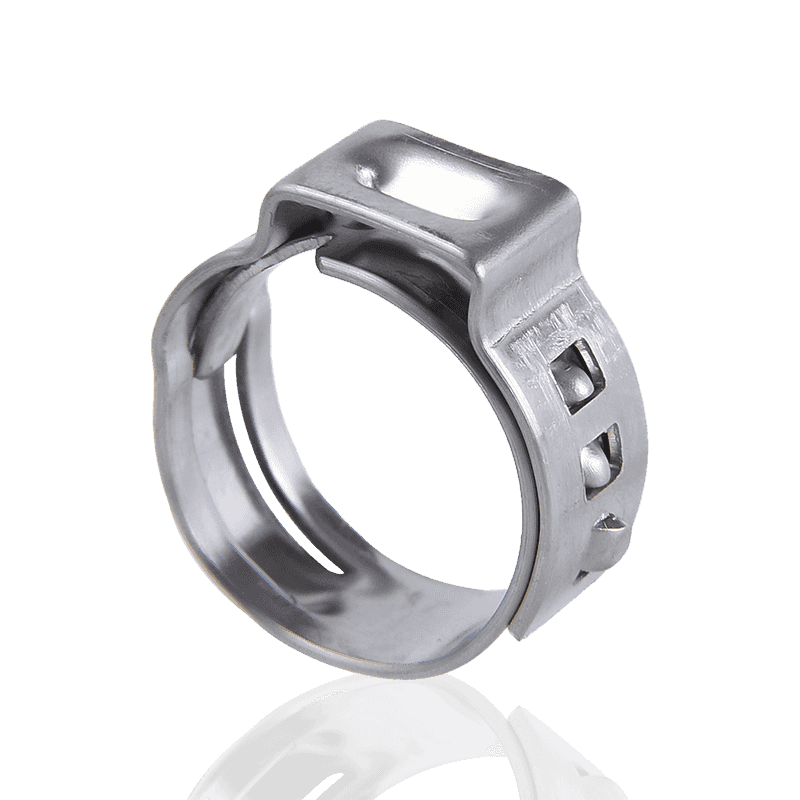
Single Ear Clamps
Single ear clamps use a stainless steel band with a single raised "ear" that is mechanically crimped closed with a specialized pincer tool, rather than tightened with a screw. Because the band has no screw housing, single ear clamps apply a very even, continuous radial force around the hose circumference, which is valuable in low-profile or vibration-sensitive assembly lines. They are typically installed once and are not designed to be reopened and reused in the same way as screw-adjustable types.
| Clamp Style | Tightening Method | Typical Use | Reusable |
|---|---|---|---|
| British (Worm Drive) | Screwdriver | General purpose | Yes |
| German (Mini) | Screwdriver | Automotive fuel/coolant | Yes |
| American (Heavy Duty) | Socket/nut driver | Vibration-prone systems | Yes |
| Strong (Extra Heavy Duty) | Socket/nut driver | Large industrial hoses | Yes |
| Single Ear | Crimping pincer tool | OEM assembly lines | No |
The chart above summarizes how band width and housing design generally affect the clamping force a hose clamp style can deliver. Strong and American heavy duty styles sit at the higher end of the scale because they combine wider bands with reinforced housings that resist deformation under torque. British and German styles sit lower because their thinner bands and lighter housings are intended for moderate-pressure, general-purpose connections rather than high-vibration or high-pressure lines. Single ear clamps fall in the middle of the range; although the band itself is strong, the clamping force depends heavily on correct crimping tool calibration during installation. This index is illustrative rather than a laboratory measurement, and actual clamping force for any specific clamp depends on band thickness, width, material grade, and installation torque. Buyers should always match the clamp style to the hose diameter, operating pressure, and vibration profile of the specific application rather than relying on style alone.
Hose Clamp Materials and Corrosion Resistance
Material selection is often more important than clamp style when it comes to long-term reliability, particularly in outdoor, marine, or chemical-exposure environments. The most common materials used in stainless steel hose clamp manufacturing are grade 304 stainless steel, grade 201 stainless steel, and carbon steel with a zinc or zinc-plated finish.
Grade 304 Stainless Steel
Grade 304 stainless steel contains chromium and nickel, which form a passive oxide layer that resists rust and staining in humid, salt-air, or washdown environments. It is generally the preferred choice for marine hose clamps, outdoor equipment, and food or beverage processing lines where long-term corrosion resistance matters more than initial cost.
Grade 201 Stainless Steel
Grade 201 substitutes some nickel content with manganese, which reduces material cost but also reduces corrosion resistance compared with 304. It performs adequately in dry, indoor, or moderate-exposure conditions but is less suitable for continuous outdoor or salt-exposed service.
Carbon Steel with Zinc Plating
Zinc-plated carbon steel clamps offer a sacrificial coating that protects the base metal until the coating wears through or is scratched, after which corrosion can progress more quickly. This option is generally suited to dry indoor applications or short-term, low-exposure use rather than continuous outdoor or wet environments.
This line chart illustrates a well-documented pattern in stainless steel metallurgy rather than a specific test result: as salt spray exposure time increases, grade 304 stainless steel shows the slowest rate of visible surface corrosion, grade 201 shows a moderate rate, and zinc-plated carbon steel shows the fastest progression once the protective coating is compromised. The neutral salt spray test referenced in the chart, commonly conducted under the ASTM B117 methodology, is a standard accelerated method used across the fastener and hardware industry to compare relative corrosion resistance between metal finishes. The gap between grade 304 and grade 201 widens significantly after roughly 100 hours of exposure, which is one reason marine and coastal buyers are advised to specify 304 rather than 201 even though the two grades can look identical when new. Zinc-plated carbon steel is the most cost-efficient option for short-term or indoor use but is not generally recommended where the clamp will face continuous moisture, salt air, or washdown cycles. When specifying a stainless steel hose clamp for outdoor, marine, or chemical-exposure service, checking the material grade stamped on the band or requesting mill certification is a more reliable practice than judging corrosion resistance by appearance alone.
Comparing Clamp Types Across Key Performance Factors
No single clamp type scores highest across every performance factor. The radar chart below compares three common styles across five practical criteria: pressure resistance, corrosion resistance, ease of installation, reusability, and vibration resistance, each scored on a relative 0 to 10 scale.
American (heavy duty) style, shown in dark green, scores highest in pressure resistance and vibration resistance, reflecting its wider band and reinforced housing. British (worm drive) style, shown in gray, scores highest in installation ease because it only requires a standard screwdriver and can be adjusted incrementally without special tools. Single ear clamps, shown as the dashed line, score well in corrosion resistance and vibration resistance since they are typically produced in full stainless steel, but score lowest in reusability because the crimped ear is not designed to be reopened once installed. No style dominates every category, which is why clamp selection should be driven by the specific demands of the application rather than by habit or by whichever type is most familiar to the installer. For example, a marine engine bay with continuous vibration and salt exposure may call for an American heavy duty or single ear stainless clamp, while a light indoor irrigation line may be adequately served by a standard British worm drive clamp. Reviewing this kind of comparison before ordering can reduce the risk of premature clamp loosening or leakage in service.
Hose Clamp Structure: A Labeled Schematic
Understanding the individual components of a worm drive hose clamp makes it easier to diagnose installation problems, such as slipping bands or stripped screws. The schematic below labels the main parts of a typical worm drive hose clamp assembly.
This diagram is illustrative and not to scale, but it shows the four functional parts common to most worm drive designs. The perforated band wraps fully around the hose and fitting, and its slots engage the threads of the worm screw. The housing, sometimes called the bridge, holds the screw in a fixed position and transfers rotational force into linear tightening of the band. The worm screw itself is the component the installer turns; each rotation advances the band by a small, consistent amount, which allows for precise torque control compared with a simple buckle-style fastener. The band slots are the engagement points where wear is most likely to occur over repeated tightening cycles, so inspecting them for deformation is a useful step before reusing a clamp on a new installation. Recognizing these parts also helps when comparing clamp styles, since British, German, American, and strong series clamps all use variations of this same basic worm drive structure, differing mainly in band width, housing thickness, and torque capacity.
How to Choose the Right Hose Clamp Size
Correct sizing is one of the most common sources of installation failure. A clamp that is too large will not compress the band tightly enough onto a small-diameter hose, while a clamp that is too small will not close fully around a larger hose. The following steps outline a straightforward sizing process:
- Measure the outer diameter of the hose after it is fitted over the connecting nipple or barb, not the hose alone, since the fitting adds thickness.
- Select a clamp whose adjustable range places the target diameter near the middle of its range rather than at either extreme, which allows margin for tightening and for any hose compression over time.
- Match the band width to the hose wall thickness; wider bands distribute clamping force over a larger surface area, which is useful for softer or thicker-walled hoses.
- Confirm the material grade suits the operating environment, referring to the corrosion resistance comparison discussed earlier in this article.
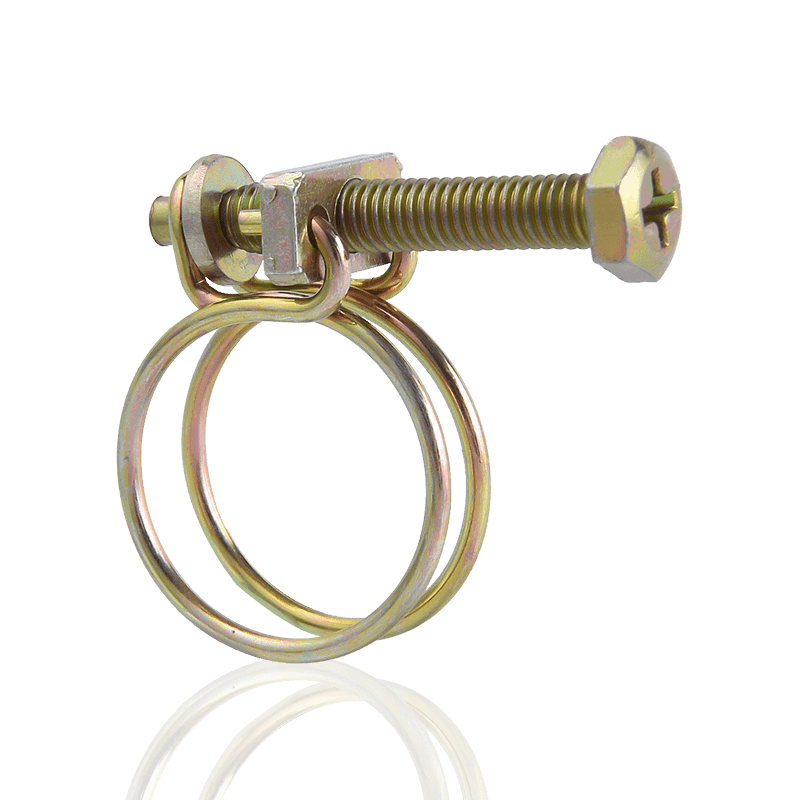
- For critical or high-vibration connections, consider a double-ring or heavy-duty style rather than a standard light-duty clamp.
Hose clamp sizes are often listed as a diameter range in millimeters or inches, such as 9 to 16 millimeters or 3/8 to 5/8 inch. When ordering in bulk for OEM assembly, providing the exact hose and fitting outer diameter, rather than relying on a general size name, produces more consistent results across large batches.
Industry Standards Relevant to Hose Clamps
Several established standards guide hose clamp design, dimensions, and testing. DIN 3017 is a widely referenced German standard covering worm drive clamp dimensions and materials, and it forms the basis for many "German style" and "British style" clamp specifications used internationally. SAE J1508 is a standard published by SAE International covering performance requirements for worm drive clamps used in automotive applications, including torque and holding force expectations. Buyers sourcing clamps for regulated industries, such as automotive OEM supply chains, often request compliance documentation referencing these standards alongside material certification for the band and housing.
In addition to dimensional standards, corrosion testing methods such as the neutral salt spray test referenced earlier (commonly associated with ASTM B117) are used to validate coating and material performance claims. When comparing suppliers, requesting test reports or material certificates for a specific batch is a more reliable verification method than relying on general marketing claims about corrosion resistance.
Typical Hose Clamp Applications by Industry
Hose clamps are used across a broad set of industries, and the specific style and material chosen often reflects the operating conditions of that sector.
- Automotive: Coolant hoses, fuel lines, air intake ducting, and turbo piping, where vibration resistance and heat tolerance are important.
- Marine: Bilge pump hoses, raw water intake lines, and exhaust hoses, where corrosion resistance is a primary concern.
- Agricultural irrigation: Sprinkler and drip irrigation hose connections, where UV exposure and outdoor weathering are common.
- Industrial equipment: Pneumatic and hydraulic hose connections on machinery, gasoline and diesel engine components, and compressed air lines.
- Building and plumbing: Drainage and sewer interface connections in building structures, where a secure, leak-resistant seal is required over long service periods.
This donut chart presents an illustrative breakdown of where hose clamps are typically used across common end markets rather than a precise market research figure. Automotive applications generally represent the largest share of hose clamp demand because modern vehicles use numerous small hose connections across cooling, fuel, and air handling systems. Industrial and irrigation applications form a substantial secondary segment, driven by the wide use of flexible hose in machinery and agricultural water delivery. Marine applications, while smaller in overall volume, place the highest demands on material corrosion resistance due to constant exposure to salt water and humidity. The remaining share covers a mix of building drainage interfaces, general repair use, and miscellaneous mechanical assembly. Recognizing which segment an application falls into can help narrow down the right combination of clamp style and material grade before placing an order.
Installation Tips and Common Mistakes
Correct installation is as important as selecting the right clamp. The following practices help avoid the most frequent causes of leaks and premature failure.
- Position the clamp over the center of the barbed or ribbed section of the fitting, not on the smooth hose beyond the fitting, so the band compresses the hose directly against a raised surface.
- Avoid overtightening, which can cut into softer hose materials or deform the band, reducing long-term sealing performance rather than improving it.
- Recheck torque after the first heat and cool cycle in automotive or engine applications, since hose material often relaxes slightly after initial installation.
- Inspect the band and housing for surface rust or deformation before reusing a worm drive clamp on a new installation.
- Use a screwdriver or driver bit that fully matches the screw head to avoid stripping, which is a common reason clamps become difficult to remove or adjust later.
About Cixi Hengtuo Hardware Co., Ltd.
Cixi Hengtuo Hardware Co., Ltd. is a professional manufacturer of hose clamps and clamp series, established in 2005 and located in Cixi City, Zhejiang Province, China. The factory currently employs nearly 100 people and has an annual production capacity of approximately 30 million units across various hose clamp series. Its location places it near the Beilun International Ship Terminal in Ningbo to the east, the Siming Mountain revolutionary base area to the south, the historical commercial hub of Yuyao to the west, and the Hangzhou Bay Bridge to the north, providing convenient transportation links for both domestic and international shipping.
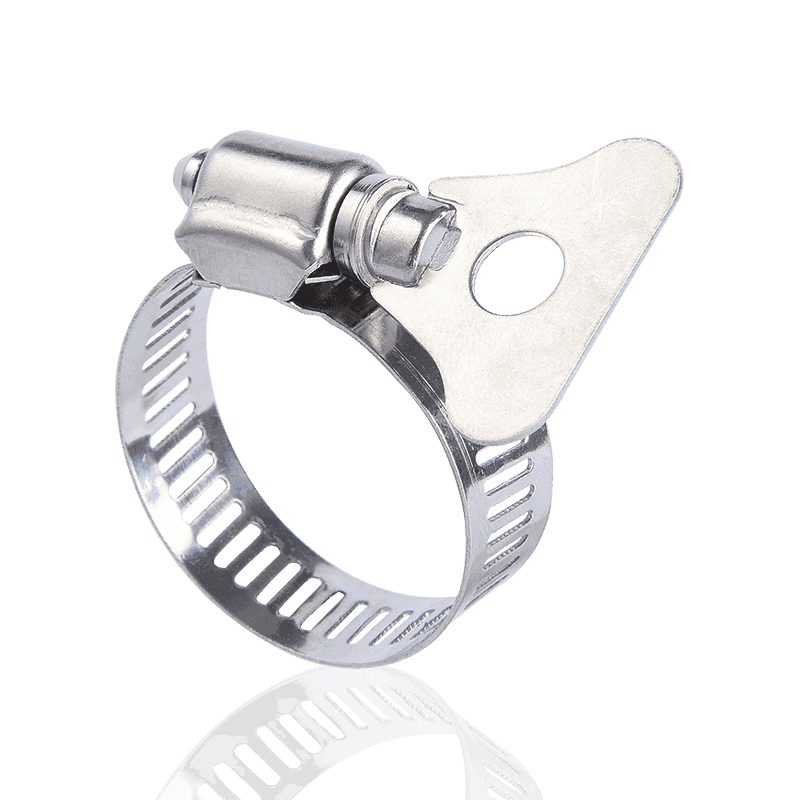
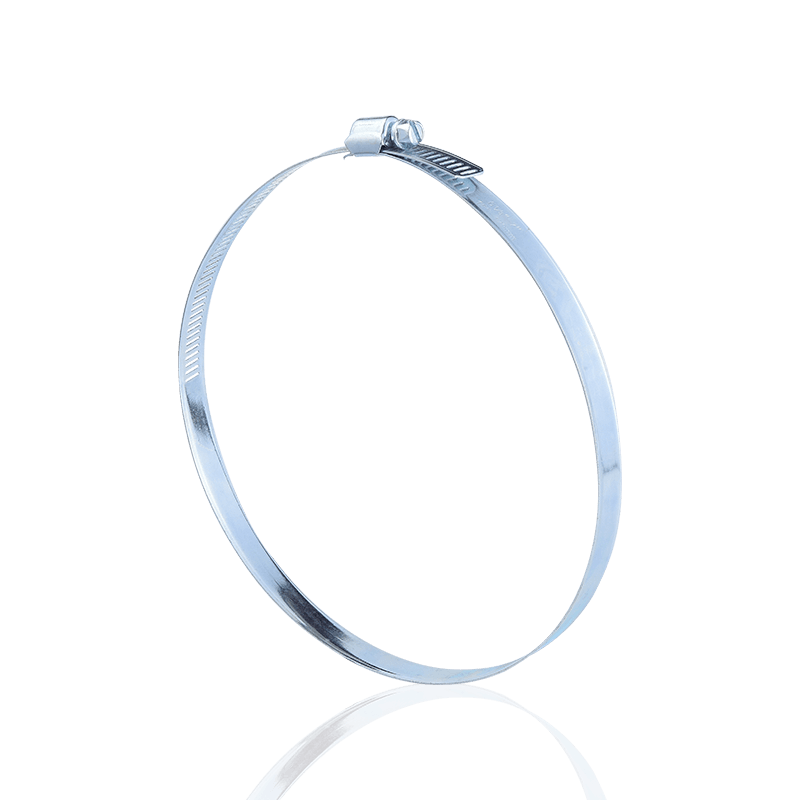
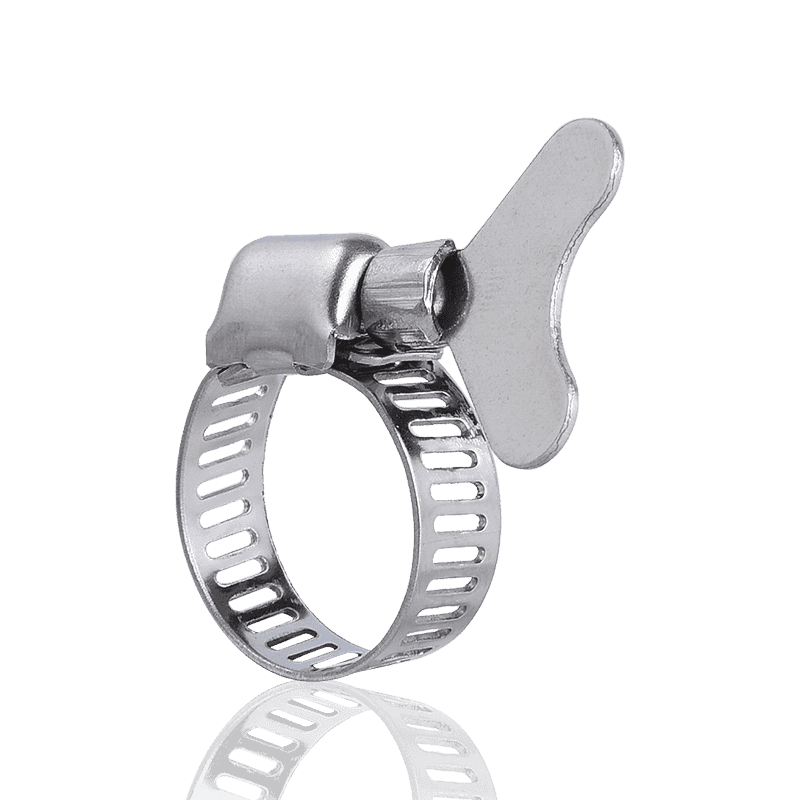
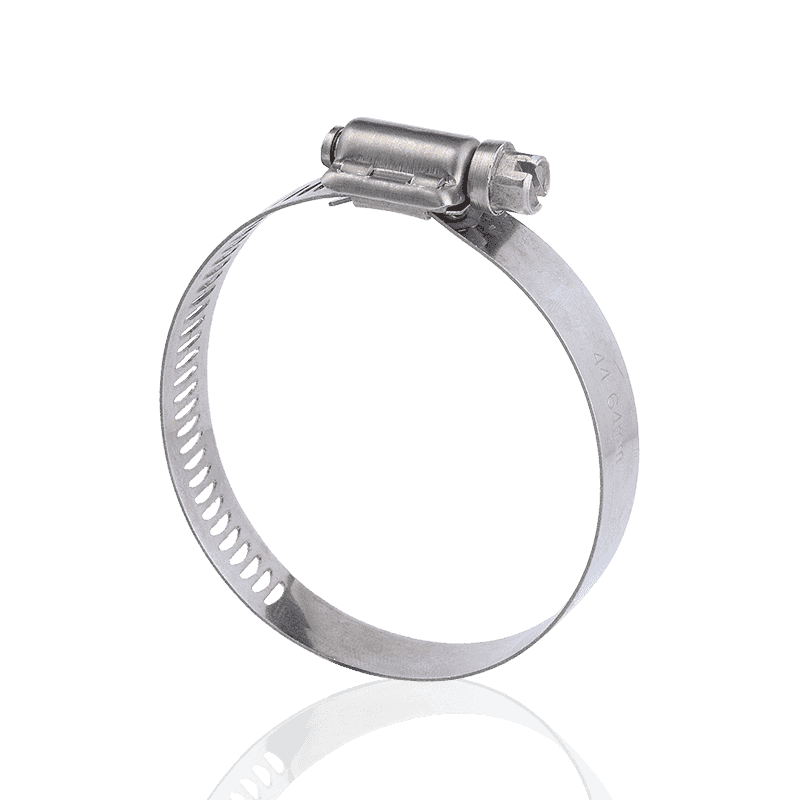
The factory produces and sells hose clamps across British style, German style, American style, strong (extra heavy duty) style, and single ear designs, and can also customize clamps according to customer specifications and hose dimensions. All products are manufactured with attention to tensile strength, pressure resistance, and corrosion resistance, and are intended for reliable use on oil, gas, and liquid hose interfaces across automobiles, tractors, ships, gasoline and diesel engines, and sprinkler irrigation systems, as well as sewer interface connections in building structures.
Cixi Hengtuo Hardware Co., Ltd. maintains technical capability across product development, design, testing, and production, supported by a structured quality system intended to provide consistent results across large production runs. The company supplies both domestic and international markets and has continued to build long-term relationships with customers through a business approach centered on quality and fair dealing.
Maintenance and Replacement Guidelines
Even a correctly installed hose clamp benefits from periodic inspection, particularly in vibration-heavy or outdoor environments. Signs that a clamp should be replaced include visible surface rust that has progressed past a light surface stain, a stripped or rounded screw head, a band that no longer sits flat around the hose, or a housing that shows cracking or deformation. In automotive and marine settings, it is common practice to inspect hose clamps during routine maintenance intervals alongside the hose itself, since hose material and clamp condition tend to degrade over similar timeframes when exposed to the same environment. Replacing an aging adjustable hose clamp proactively is generally simpler and more predictable than responding to an unplanned leak after failure.
Frequently Asked Questions
Q1: What is the difference between a British style and an American style hose clamp?
British style clamps use a lighter band and housing suited to general purpose use, while American style clamps use a wider band and reinforced housing designed for higher torque and greater vibration resistance, making them common in heavy-duty or engine-related applications.
Q2: Can a single ear clamp be reused after removal?
Single ear clamps are designed for one-time crimped installation and are generally not intended to be reopened and reused, unlike screw-adjustable worm drive clamps which can typically be loosened and retightened multiple times.
Q3: Why does hose clamp material grade matter for marine use?
Marine environments involve constant salt air and moisture exposure, which accelerates corrosion in lower-grade materials. Grade 304 stainless steel offers substantially better long-term corrosion resistance than grade 201 or zinc-plated carbon steel in these conditions.
Q4: How do I know what size hose clamp to order?
Measure the outer diameter of the hose after it is fitted over the connecting nipple or barb, then choose a clamp whose adjustable range places that measurement comfortably near the middle of the range rather than at either extreme.
Q5: Can hose clamps be customized for non-standard hose diameters?
Yes, many manufacturers, including specialized hose clamp factories, can produce custom band widths, lengths, and housing configurations to match non-standard hose or fitting dimensions for OEM or specialized industrial use.


The company strives for excellence in every aspect of production, sales, and after-sales, ensuring customer satisfaction is the unchanging purpose of the enterprise!
Quick links
Product links
Contact Us
-
Address:222 Zhouhu Road, Zhouxiang Town, Cixi City, Zhejiang Province, China
-
Phone: +86-13736108443
-
Tel: +86-574-63441573
-
Fax: +86-574-63452355
-
E-mail: [email protected]
Copyright ©Cixi Hengtuo Hardware Co., Ltd. Rights Reserved. Wholesale Hose Clamp Manufacturer China Hose Clamp Factory
