

 EN
EN  English
 中文简体
中文简体News

What are the best t-bolt clamps for high pressure hoses?
 2026.03.20
 Industry News
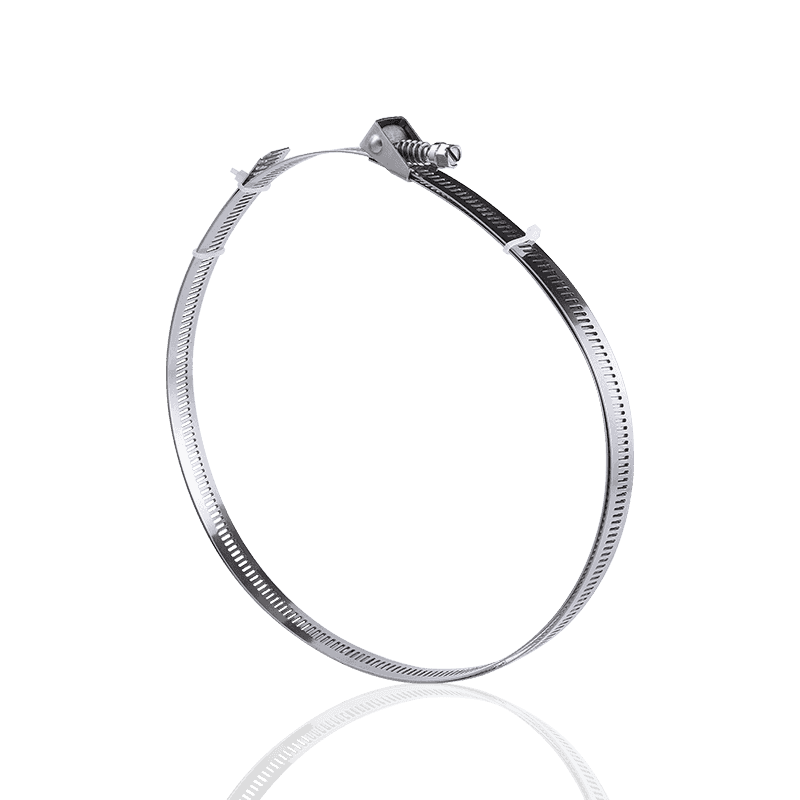
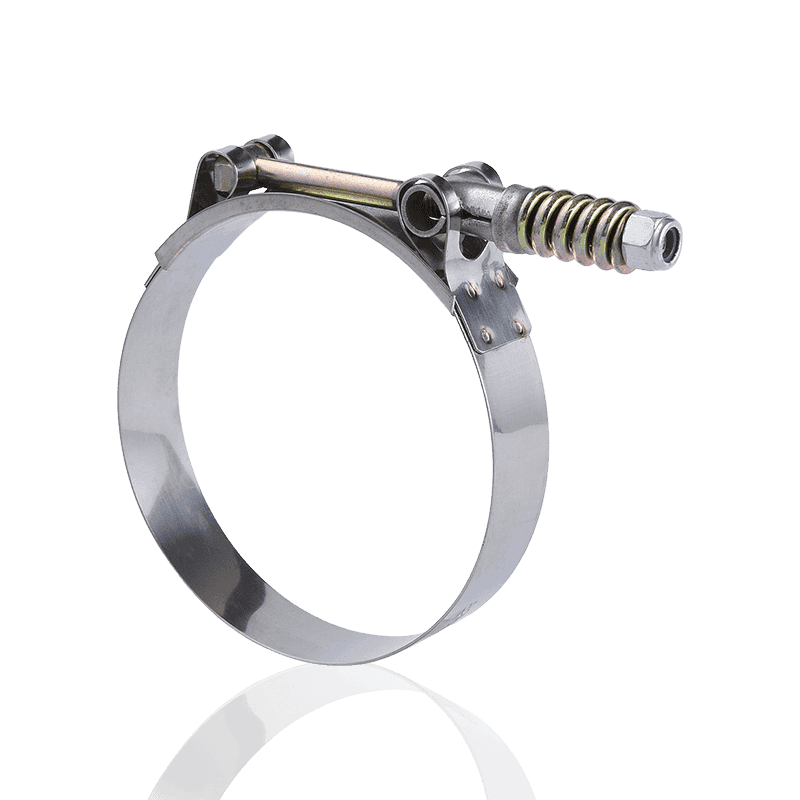
For high pressure hose applications, T-bolt clamps with 304 or 316 stainless steel construction, a band width of at least 9/16 inch (14mm), and a worm-drive or solid band design are the top choices. These clamps reliably maintain sealing integrity at pressures exceeding 100 PSI, making them the preferred option in automotive, marine, and industrial environments. Below is a complete breakdown of what to look for, how they compare, and which configurations perform best under demanding conditions.
- 1 What Makes a T-Bolt Clamp Suitable for High Pressure
- 2 Key Specifications to Check Before Buying
- 3 Best T-Bolt Clamp Types by Application
- 4 How to Select the Right Clamp Size
- 5 Correct Installation Torque and Common Mistakes
- 6 T-Bolt Clamps vs. Other Clamp Types for High Pressure
- 7 Signs a T-Bolt Clamp Is Failing or Incorrectly Installed
What Makes a T-Bolt Clamp Suitable for High Pressure
Not all T-bolt clamps are rated for high pressure service. The key differentiators are material grade, band design, and hardware quality. A clamp that fails under pressure can cause catastrophic leaks — in turbo systems, for example, a single failed clamp can result in immediate boost loss and engine damage.
Band Material and Thickness
The band is the primary load-bearing element. 304 stainless steel bands (0.030–0.035 inch thick) are the industry baseline for high pressure use, while 316 stainless is recommended in saltwater or highly corrosive environments. Bands thinner than 0.025 inch risk deforming under cyclic pressure loads above 80 PSI.
Solid Band vs. Slotted Band
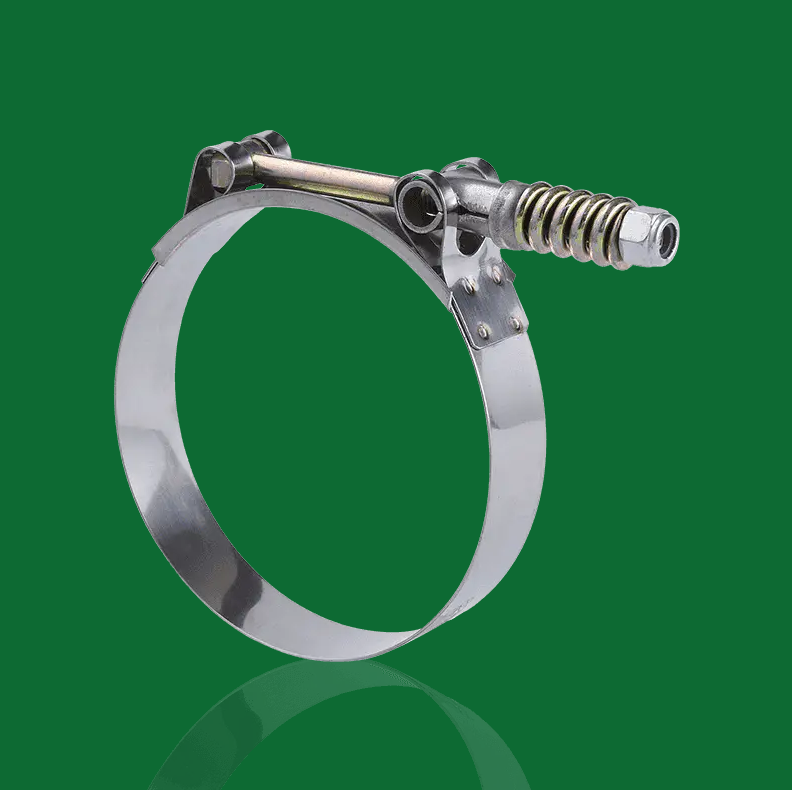
Solid bands distribute clamping force uniformly around the entire hose circumference. Slotted bands, while lighter, create stress concentrations at slot edges — a problem when dealing with silicone or rubber hoses that deform under pressure. For applications above 80 PSI, solid band construction is strongly recommended.
T-Bolt Hardware Design
The bolt, nut, and housing assembly determines how much clamping torque can be safely applied. Captive nut designs (where the nut is captured inside a housing) allow torque values up to 80 in-lbs without bolt walk, which is critical for maintaining consistent sealing on pressurized couplings.
Key Specifications to Check Before Buying
When evaluating T-bolt clamps for high pressure hose connections, compare these core specifications:
| Specification | Standard Use | High Pressure Use |
|---|---|---|
| Band Material | 201 Stainless | 304 / 316 Stainless |
| Band Width | 3/8 inch (9.5mm) | 9/16 inch (14mm) or wider |
| Band Type | Slotted | Solid |
| Max Torque Rating | 40–50 in-lbs | 60–80 in-lbs |
| Bolt Type | Standard hex | Captive nut / flanged bolt |
| Pressure Rating | Up to 50 PSI | 80–200+ PSI |
Best T-Bolt Clamp Types by Application
Different high pressure environments demand different clamp configurations. Here is a breakdown by use case:
Automotive Turbo and Intercooler Hoses
Turbocharged engines generate boost pressures typically between 15 and 30 PSI, with spikes up to 40 PSI in performance builds. Clamps with a minimum 9/16-inch solid band width and 304 stainless construction are the correct choice for charge pipes and intercooler hoses. The clamp must also handle thermal cycling from −40°F to 300°F without losing clamp load.
Marine and Saltwater Cooling Systems
Marine environments expose clamps to continuous salt spray and submersion. 316 stainless steel T-bolt clamps resist chloride-induced pitting corrosion far better than 304 or 201 grades. For seawater cooling hoses operating at 30–60 PSI, all-316 construction — including the bolt and nut — is essential.
Industrial Hydraulic and Pneumatic Lines
Industrial applications often see sustained pressures of 100–200 PSI. In these contexts, heavy-duty T-bolt clamps with flanged edges and reinforced housing assemblies are required. Flanged band edges prevent the clamp from cutting into hose material under high radial compression — a common failure mode with standard flat-edge bands.
Racing and Performance Applications
Racing environments demand lightweight solutions without sacrificing clamping force. Billet aluminum T-bolt clamps are popular for fuel and coolant hoses in competition vehicles, offering weight savings of up to 60% compared to steel equivalents while still handling 80–100 PSI with proper torquing. However, aluminum clamps are not suitable for exhaust-adjacent applications where temperatures exceed 400°F.
How to Select the Right Clamp Size
Selecting the correct clamp diameter is critical — an oversized clamp cannot be tightened enough to seal; an undersized one cannot be installed. Follow these steps:
- Measure the outside diameter (OD) of the hose when installed on the fitting, not the hose ID or the fitting OD alone.
- Add 1/8 inch (3mm) to account for silicone hose compression under clamp load.
- Select a clamp whose range spans the measured OD, with the OD falling in the middle third of the clamp's adjustment range for optimal sealing geometry.
- Verify that the clamp's maximum torque rating is achievable with a standard 3/8-inch or 5/16-inch hex driver.
For example, a 2.5-inch silicone coupler hose on a 2.5-inch aluminum pipe will have an assembled OD of approximately 2.75–2.875 inches. A clamp with a range of 2.625–2.875 inches places that measurement precisely in the middle of its adjustment window.
Correct Installation Torque and Common Mistakes
Even the best T-bolt clamp will fail if improperly installed. The most common errors include over-torquing, under-torquing, and incorrect seating.
- Over-torquing — applying more than the rated torque collapses the hose wall and can crack the fitting, especially on aluminum charge pipe couplers. Most 9/16-inch T-bolt clamps are rated for 45–80 in-lbs; exceeding this by 20% can cause permanent deformation.
- Under-torquing — insufficient torque leaves the hose partially unseated. At high pressure, the hose can blow off the fitting entirely. Always use a calibrated torque wrench for critical applications.
- Uneven band seating — the band must sit flat and fully within the hose bead or groove. A cocked or tilted band creates a leak path even when correctly torqued.
- Retorquing after heat soak — silicone hoses compress slightly after the first heat cycle. Retorquing to spec after the first operational heat cycle reduces leak risk by up to 40% on new installations.
T-Bolt Clamps vs. Other Clamp Types for High Pressure
Understanding where T-bolt clamps excel — and where they don't — helps make the right selection for the application.
| Clamp Type | Max Pressure | Best For | Weakness |
|---|---|---|---|
| T-Bolt (Solid Band) | 200+ PSI | Turbo, intercooler, marine | Requires torque tool |
| Worm Gear (Screw) | 30–50 PSI | General automotive | Uneven force, cuts hose |
| Spring / Constant Tension | 40–60 PSI | Thermal cycling hoses | Not adjustable, limited range |
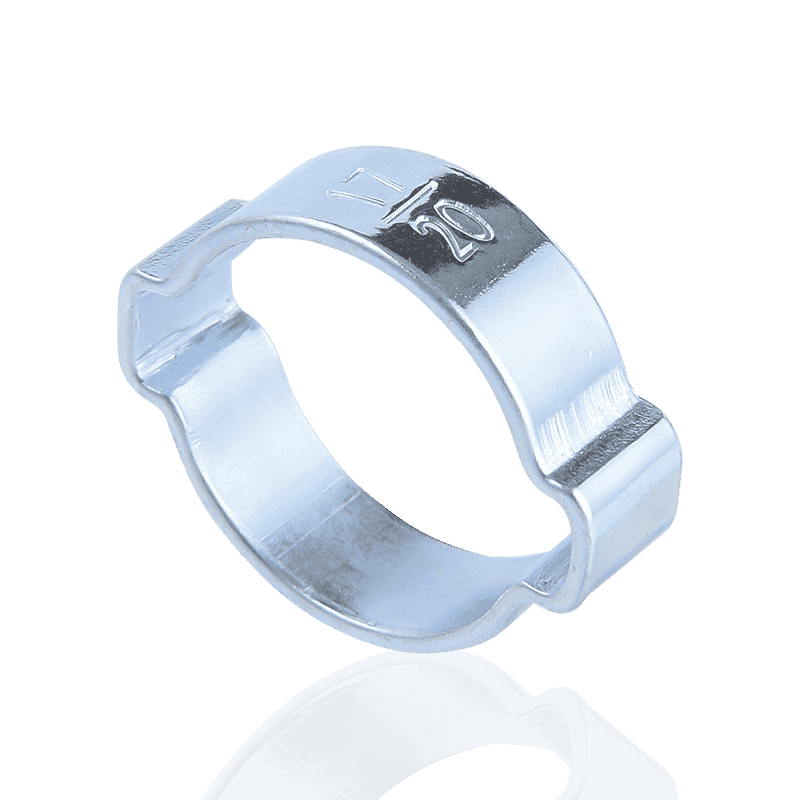
| Ear Clamp (Oetiker) | 80–100 PSI | OEM coolant lines | Single-use, requires special tool |
| V-Band Clamp | 150–300 PSI | Exhaust, turbo flanges | Requires matched flanges |
T-bolt clamps occupy the ideal middle ground: they handle far higher pressures than standard screw clamps while remaining reusable and adjustable, unlike ear clamps. V-band clamps outperform them at extreme pressures but require precision-machined flanges, making them unsuitable for standard hose-over-fitting connections.
Signs a T-Bolt Clamp Is Failing or Incorrectly Installed
Recognizing early failure signs prevents costly system failures:
- Visible weeping or moisture tracks at the clamp edge, especially after a cold start when system pressure is highest.
- Rust staining on the band or bolt — even on stainless — indicates the protective oxide layer has been compromised, usually from chloride exposure or mechanical damage.
- The hose can be physically rotated around the fitting with hand pressure — a sign the clamp load has dropped below the minimum sealing threshold.
- Bolt turn-down during retorque — if the bolt continues to turn past the expected torque value, the band may have deformed or the bolt threads are stripping.
As a general maintenance guideline, inspect T-bolt clamps on high pressure systems every 12 months or 15,000 miles, whichever comes first. Replace immediately if any corrosion, deformation, or loss of preload is detected.

The company strives for excellence in every aspect of production, sales, and after-sales, ensuring customer satisfaction is the unchanging purpose of the enterprise!
Quick links
Product links
Contact Us
-
Address:222 Zhouhu Road, Zhouxiang Town, Cixi City, Zhejiang Province, China
-
Phone: +86-13736108443
-
Tel: +86-574-63441573
-
Fax: +86-574-63452355
-
E-mail: [email protected]
Copyright ©Cixi Hengtuo Hardware Co., Ltd. Rights Reserved. Wholesale Hose Clamp Manufacturer China Hose Clamp Factory
