

 EN
EN  English
 中文简体
中文简体News
 Home / News / Industry News / Why does my Taiwan style hose clamp keep loosening after a few drives?
 Why does my Taiwan style hose clamp keep loosening after a few drives?
 2026.05.08
 Industry News
If your Taiwan style hose clamp keeps loosening after a few drives, the most likely causes are improper torque during installation, thermal expansion cycles, or use of a clamp not rated for your hose diameter or pressure. Tightening to the correct specification and selecting a clamp with a locking or anti-slip band profile will resolve most loosening issues in automotive and industrial applications.
Taiwan hose clamps are widely used in automotive, marine, agricultural, and industrial systems. Their adjustable band design makes them versatile, but like all mechanical fasteners, performance depends heavily on material quality, installation technique, and environmental conditions. This guide covers everything you need to know — from buying guidance and specifications to maintenance, high-temperature resistance, and installation methods.
- 1 Taiwan Hose Clamp Buying Guide: What to Look For
- 2 Taiwan Hose Clamp Specifications: Size, Torque, and Pressure
- 3 High-Pressure Hose Clamp Installation Techniques
- 4 Adjustable and Anti-Slip Hose Clamps: When Each Type Is Right
- 5 Food-Grade and High-Temperature Resistant Hose Clamps
- 6 Recommended Corrosion-Resistant Hose Clamps for Harsh Environments
- 7 Hose Clamp Maintenance and Care
- 8 About Cixi Hengtuo Hardware Co., Ltd.
- 9 Frequently Asked Questions
Taiwan Hose Clamp Buying Guide: What to Look For
Selecting the right Taiwan hose clamp starts with understanding your application. Clamps that work well on low-pressure irrigation lines will fail prematurely on high-pressure fuel or coolant hoses. Below are the key factors to evaluate before purchasing.
Material Grade
The most common materials for stainless steel hose clamps are 201, 304, and 316 stainless. 304 stainless offers good corrosion resistance for most environments. 316 stainless adds molybdenum for superior resistance to chlorides — essential for marine or food-grade applications. 201 stainless is more budget-oriented but has lower corrosion resistance and is unsuitable for saltwater or chemical environments.
Clamp Width and Band Profile
Wider bands distribute clamping force over a larger surface area, reducing the risk of hose deformation. Standard widths range from 8 mm to 25 mm. Anti-slip hose clamps with rolled or embossed band profiles improve grip and resist rotation under vibration — a major advantage in engine bay applications where vibration is continuous.
Advantages and Disadvantages of Stainless Steel Hose Clamps
| Factor | Advantage | Disadvantage |
|---|---|---|
| Corrosion Resistance | Excellent in 304/316 grades | 201 grade limited in marine use |
| Temperature Range | Handles -40°C to 300°C | Expansion may loosen clamp |
| Reusability | Fully adjustable and reusable | Screw may strip if over-tightened |
| Pressure Rating | Up to 150 psi on heavy-duty models | Standard models limited to 60–80 psi |
| Food-Grade Compliance | 316L available with smooth band | Requires specific screw housing design |
Corrosion Resistance Score by Material Grade (out of 100)
Relative corrosion resistance ratings for common hose clamp band materials
Taiwan Hose Clamp Specifications: Size, Torque, and Pressure
Getting the specifications right is critical. Taiwan hose clamp specifications follow standardized sizing but vary by series. Most adjustable hose clamps are labeled with their clamping range in millimeters (e.g., 16–27 mm, 32–51 mm). Selecting one size too large means the screw housing sits directly on the hose, creating uneven pressure and leaks.
Recommended installation torque for standard stainless clamps is 2–4 Nm for 8 mm band width and 4–7 Nm for 12–14 mm width. Over-torquing by even 30% can shear the screw slot, strip the worm thread, or cut into the hose, especially silicone. Under-torquing leads directly to loosening under vibration.
| Clamp Range (mm) | Band Width (mm) | Max Torque (Nm) | Typical Use |
|---|---|---|---|
| 8–16 | 8 | 2.5 | Fuel lines, small hoses |
| 16–27 | 9 | 3.5 | Radiator, coolant hoses |
| 32–51 | 12 | 5.0 | Turbo, intercooler pipes |
| 50–70 | 14 | 7.0 | Heavy-duty hydraulic hoses |
High-Pressure Hose Clamp Installation Techniques
Correct installation is the single biggest factor in preventing loosening. These high-pressure hose clamp installation techniques apply whether you are working on automotive cooling systems, diesel engines, or irrigation lines.
Step-by-Step Installation
- Clean the hose barb and hose end — remove oil, grease, or debris that reduces friction.
- Slide the clamp onto the hose before fitting the hose over the barb.
- Push the hose fully onto the fitting until it reaches a hard stop or the marked line.
- Position the clamp 6–10 mm from the hose end, not over the bead or rib of the fitting.
- Tighten using a torque screwdriver or calibrated nut driver to the specified torque.
- After the first heat cycle (engine warm-up or system pressurization), re-check and re-torque.
Heavy-Duty Hose Clamp Installation Methods
For heavy-duty hose clamp installation in high-vibration environments — such as diesel tractors, ships, or industrial compressors — double-clamping is a proven method. Two clamps positioned 10–15 mm apart provide redundant sealing force. Additionally, using clamps with a smooth inner liner or rubber insert prevents band edges from cutting into the hose wall during vibration cycles.
Clamp Loosening Rate vs Installation Torque (% loosening after 500 thermal cycles)
Loosening rate drops sharply when torque reaches 3–4 Nm — the recommended installation range for 9–12 mm band clamps
Adjustable and Anti-Slip Hose Clamps: When Each Type Is Right
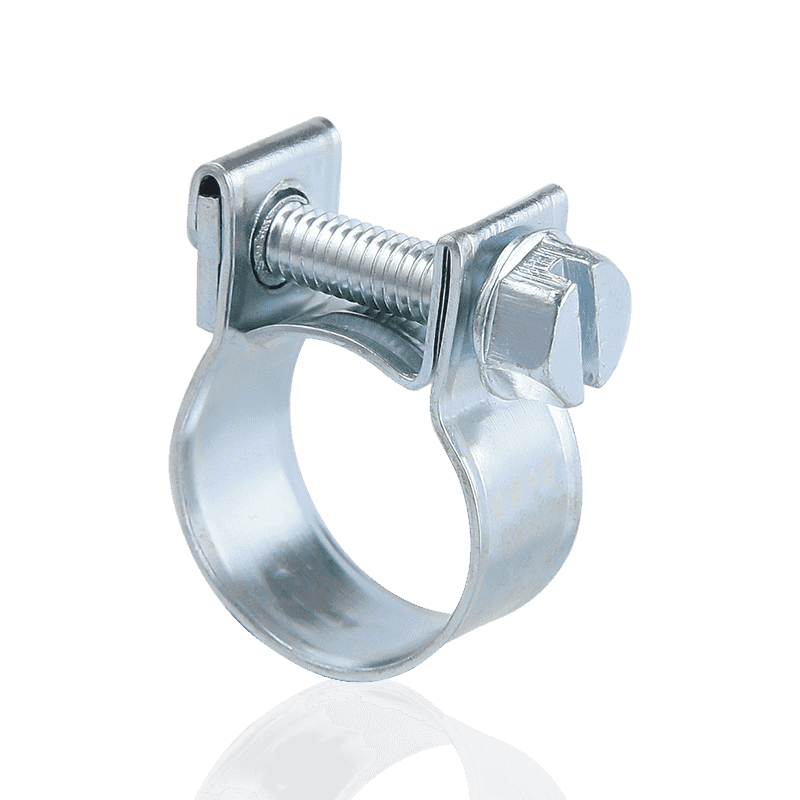
Adjustable hose clamps with a worm-drive mechanism remain the most versatile option for field installation and maintenance. The screw can be retightened without removing the clamp, making them ideal for applications where periodic inspection is part of a maintenance routine.
Anti-slip hose clamps use a textured or perforated band that locks into the hose surface, preventing rotational movement caused by torque reactions in engines or pumps. Studies of automotive hose joint failures show that over 40% of leaks in worm-drive clamps are caused by clamp rotation rather than insufficient clamping force. An anti-slip profile directly addresses this failure mode.
Spiral Hose Clamp Usage Tips
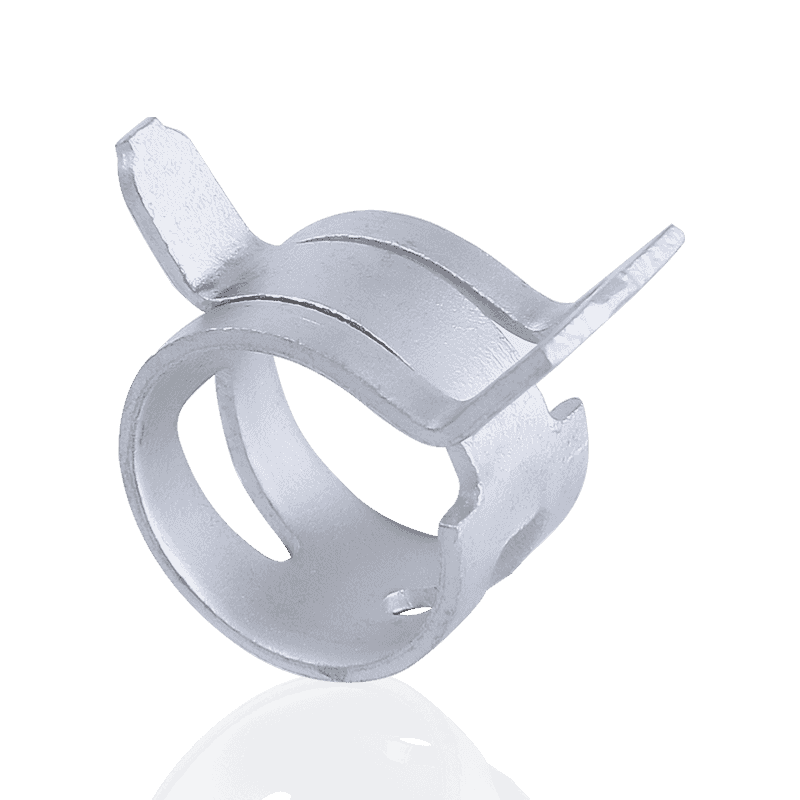
Spiral hose clamps (also called spring band or constant-tension clamps) are designed to maintain consistent clamping load as the hose expands and contracts with temperature. Unlike worm-drive clamps, they do not rely on thread engagement to hold tension. This makes them well-suited for high-temperature resistant hose clamp applications such as turbocharger outlet pipes and coolant hoses near the cylinder head, where temperatures may cycle between -20°C and 180°C repeatedly.
For best results with spiral clamps, use a dedicated installation tool that compresses the clamp evenly. Asymmetric installation causes one side to over-grip and the other to under-grip, defeating the purpose of the constant-tension design.
Clamp Type Performance Radar Comparison
Radar comparison of worm-drive vs spiral clamp performance across six key criteria
Food-Grade and High-Temperature Resistant Hose Clamps
Food-grade hose clamps differ from standard industrial clamps in several important ways. The band must have no crevices, perforations, or slots where food residue or bacteria can accumulate. This means the worm-drive housing is fully enclosed and the band inner surface is smooth. Materials must comply with food safety regulations — 316L stainless steel is the standard choice.
For high-temperature resistant hose clamp applications such as exhaust heat shields, turbo systems, and steam lines, the band material must retain its clamping force at elevated temperatures. Standard 304 stainless steel maintains adequate strength up to approximately 250°C. Applications above this threshold should use Inconel or 321 stainless steel. Avoid zinc-plated or cadmium-coated clamps in any high-temperature use — these coatings degrade rapidly above 120°C and may release toxic fumes.
Maximum Rated Temperature by Clamp Band Material (°C)
Approximate maximum continuous service temperature for common hose clamp band materials
Recommended Corrosion-Resistant Hose Clamps for Harsh Environments
Corrosion-resistant hose clamps are essential in marine, coastal, chemical processing, and agricultural irrigation settings. Salt spray, fertilizer residues, and industrial chemicals attack standard carbon steel and even lower-grade stainless within months. In salt-spray tests conducted per ISO 9227, 304 stainless samples showed first corrosion at approximately 500 hours, while 316 stainless resisted corrosion beyond 1,000 hours.
For agricultural sprinkler irrigation systems — a core application for hose clamps — the combination of mineral deposits from water and fertilizer residue makes 316 stainless the preferred specification. When paired with an EPDM or silicone inner liner, the clamp will also prevent galvanic corrosion where the band contacts aluminum fittings.
Selection Checklist for Corrosive Environments
- Specify 316 or 316L stainless steel for the band, screw, and housing
- Avoid zinc-plated screws even when the band is stainless — the screw corrodes first
- Use wider bands (12–14 mm) to distribute load and reduce stress concentration
- Consider all-stainless housings (no plastic components) for outdoor UV exposure
- For chemical exposure, request material certification (MTC) from the manufacturer
Hose Clamp Maintenance and Care
Hose clamp maintenance is straightforward but often overlooked. A preventive inspection schedule significantly extends service life and prevents unexpected failures. For automotive applications, check clamps at every oil change interval. For industrial systems, monthly inspection is recommended in high-vibration or high-temperature environments.
Maintenance Inspection Points
- Screw engagement: Verify the worm thread is fully engaged and the screw turns smoothly without slipping
- Band integrity: Look for cracks, corrosion pitting, or deformation along the band length
- Hose condition: Check for cracking, bulging near the clamp edge, or softening of the hose wall
- Position check: Confirm the clamp has not rotated or migrated from its installation position
- Torque verification: Re-torque after the first 50 hours of operation in new installations
When a clamp is removed for inspection, do not reuse it on a safety-critical line. The band may have plastically deformed during removal, reducing its ability to generate consistent clamping force. Hose clamps are low-cost components — replacement is always the safer choice when in doubt.
About Cixi Hengtuo Hardware Co., Ltd.
Cixi Hengtuo Hardware Co., Ltd. is a professional manufacturer of hose clamps and clamp series. Established in 2005 and located in Cixi City, Zhejiang Province, the factory currently employs nearly 100 people and produces 30 million hose clamps annually across various series. The facility is strategically positioned with excellent logistics access — adjacent to Beilun International Ship Terminal in Ningbo to the east, Yuyao to the west, and connected to the Hangzhou Bay Bridge corridor to the north.
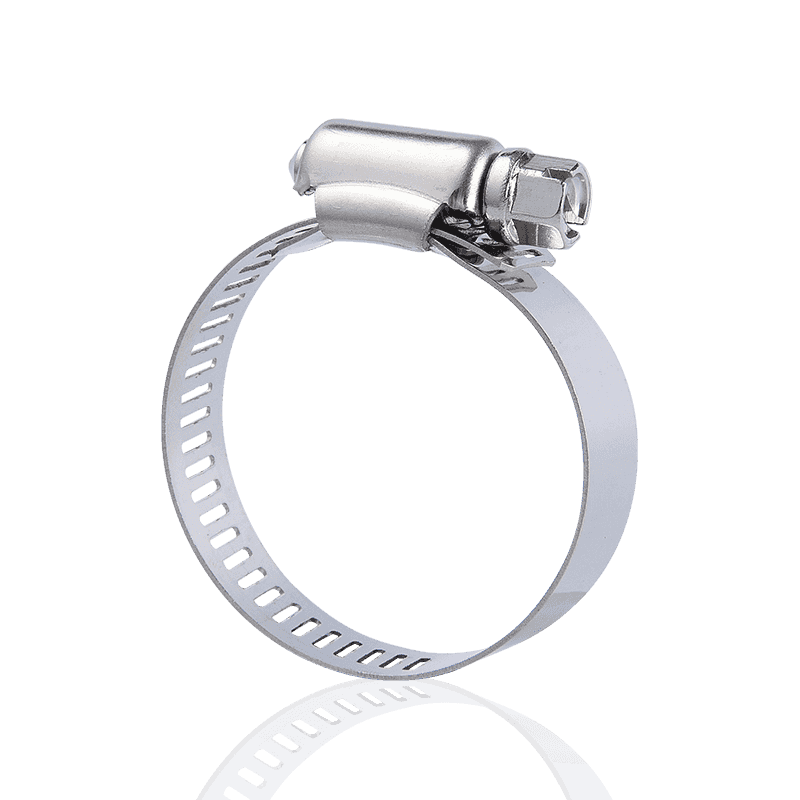
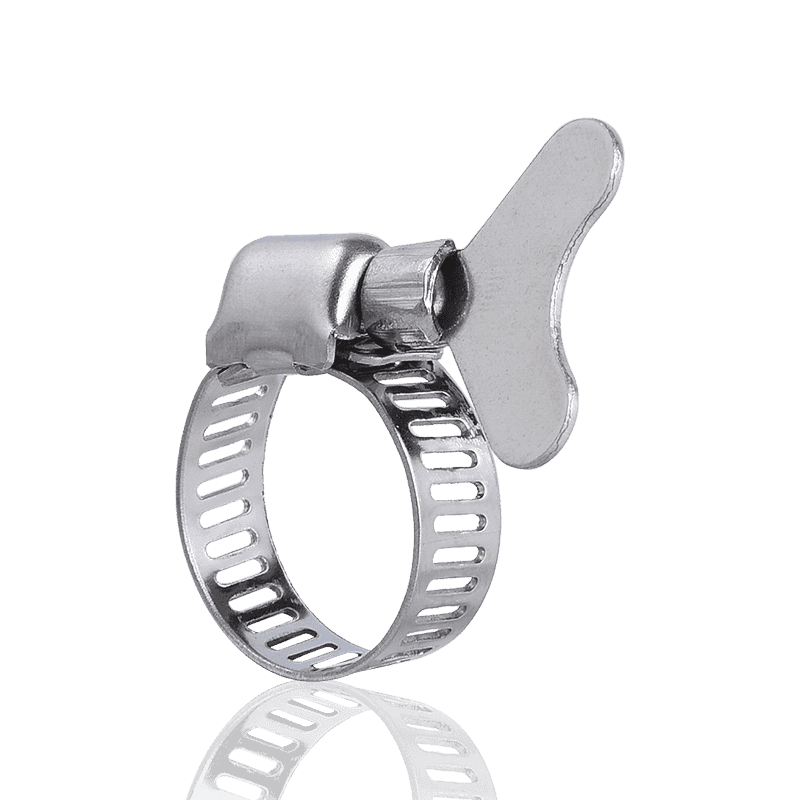
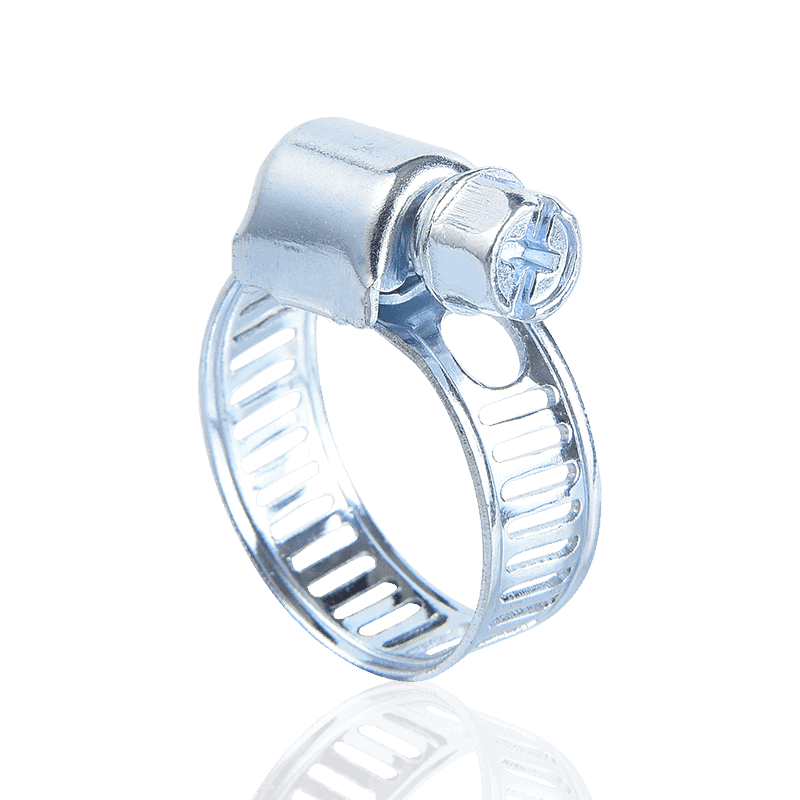
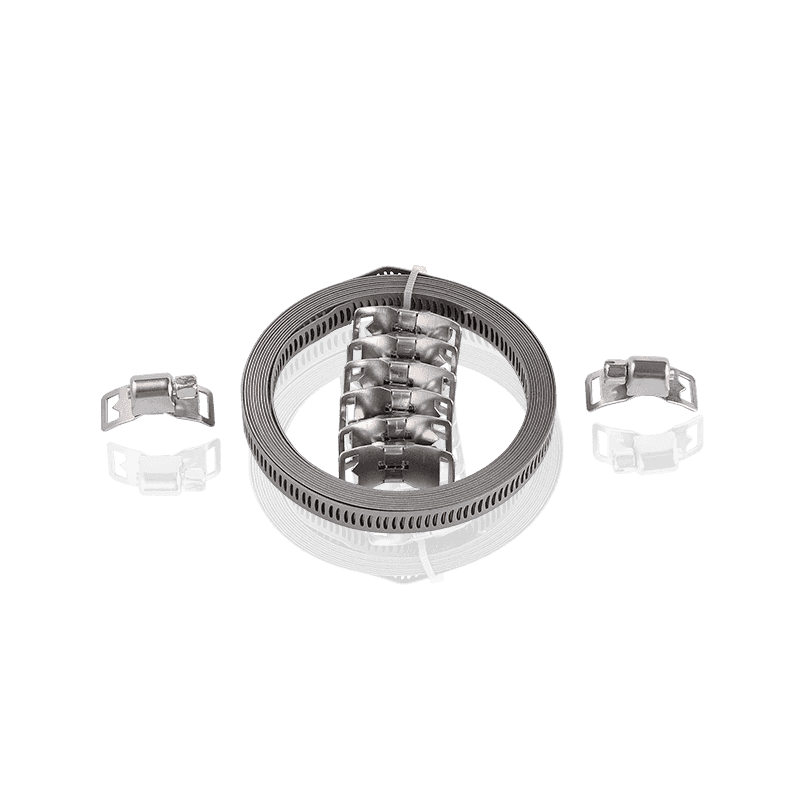
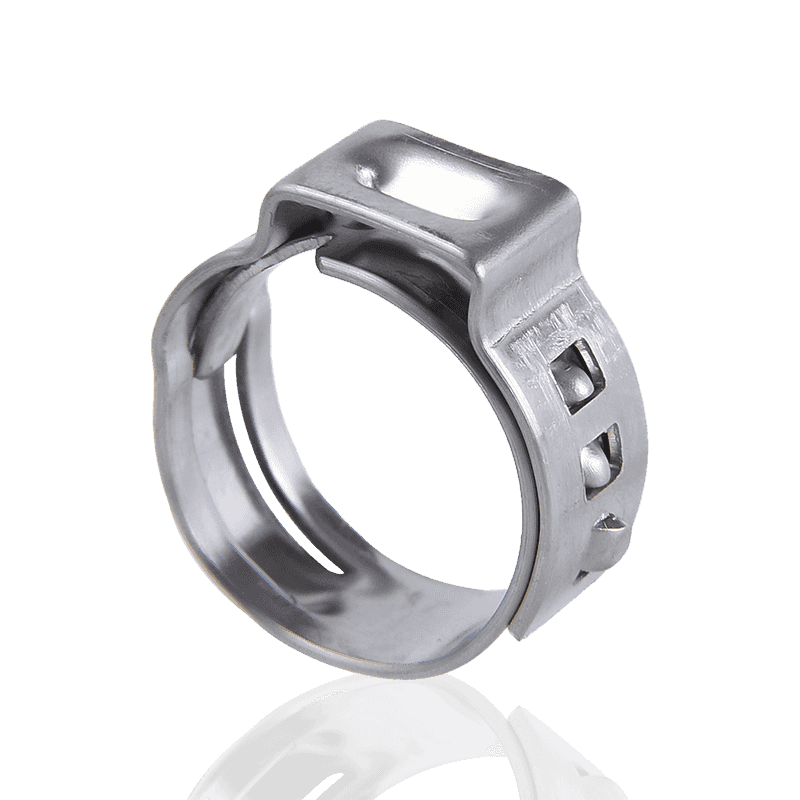
The factory produces and sells various specifications, including British style, German style, American style, strong style, and single ear clamps. Custom manufacturing is available based on client specifications. All products are designed for strong resistance, high-pressure resistance, and corrosion resistance, serving applications across automobiles, tractors, marine vessels, gasoline engines, diesel engines, and sprinkler irrigation systems.
With advanced equipment, complete testing methods, and a reliable quality system, Cixi Hengtuo Hardware Co., Ltd. provides a one-stop service covering product development, production, and sales. The factory has maintained its business philosophy of "quality, fair price" for years, earning consistent praise from domestic and international clients. Products are exported globally, supported by continuous improvement and a commitment to customer satisfaction.
Frequently Asked Questions
Q1. Why does my Taiwan style hose clamp keep loosening after a few drives?
The most common causes are under-torquing at installation, thermal expansion cycles that relax thread engagement, or selecting a clamp diameter too large for the hose. Re-torque to specification after the first heat cycle, and consider using an anti-slip or constant-tension spiral clamp in high-vibration applications.
Q2. What is the difference between 304 and 316 stainless steel hose clamps?
304 stainless steel offers good corrosion resistance for most general applications. 316 stainless contains molybdenum, which provides significantly better resistance to chlorides and chemical exposure. For marine, coastal, or food-processing environments, 316 or 316L is the appropriate choice.
Q3. Can I reuse a hose clamp after removing it?
For non-critical applications, a clamp in good condition may be reused if the band shows no corrosion, cracks, or deformation and the screw thread is intact. For fuel lines, coolant hoses, or pressurized hydraulic connections, replacement with a new clamp is always the safer practice.
Q4. What clamp type is best for high-temperature applications?
Spiral (constant-tension) clamps made from 304 or 316 stainless steel handle temperatures up to 250–280°C reliably. For sustained temperatures above 300°C, 321 stainless or Inconel alloy bands are recommended. Avoid zinc-plated or painted clamps entirely in high-temperature environments.
Q5. How do I know which clamp size to select for my hose?
Measure the outside diameter of the hose when it is installed on the fitting. Choose a clamp whose adjustment range covers that diameter with the screw positioned roughly in the middle of its travel. A clamp that is too large will have the screw housing sitting on the hose, creating uneven compression and potential leaks.
Q6. Does Cixi Hengtuo Hardware support custom specifications?
Yes. Cixi Hengtuo Hardware Co., Ltd. offers custom manufacturing based on client drawings or requirements, including non-standard band widths, specific material grades, and special diameter ranges. Contact the factory directly with your specifications for a production assessment.

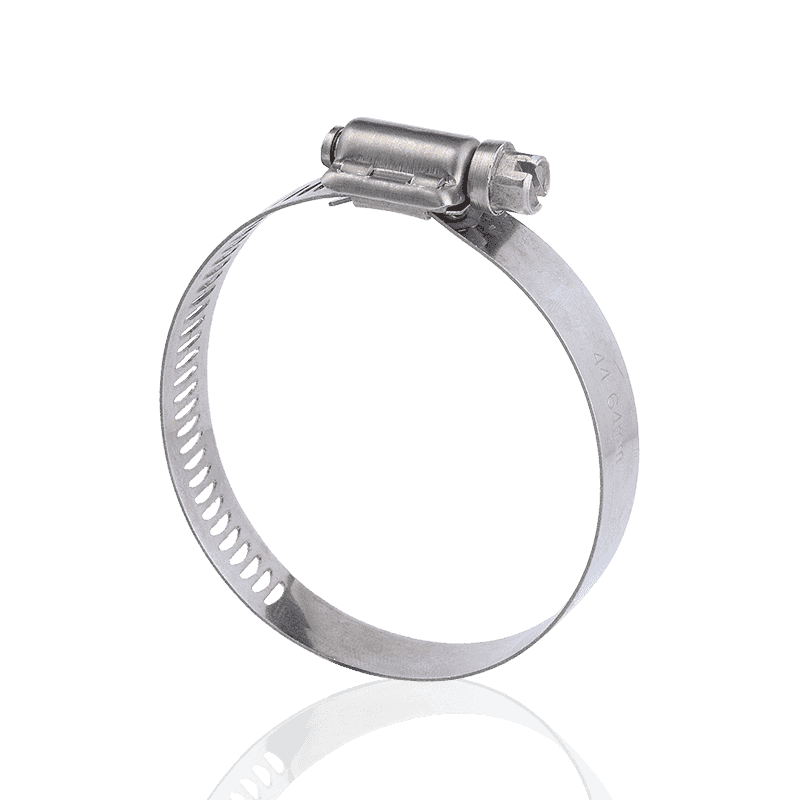
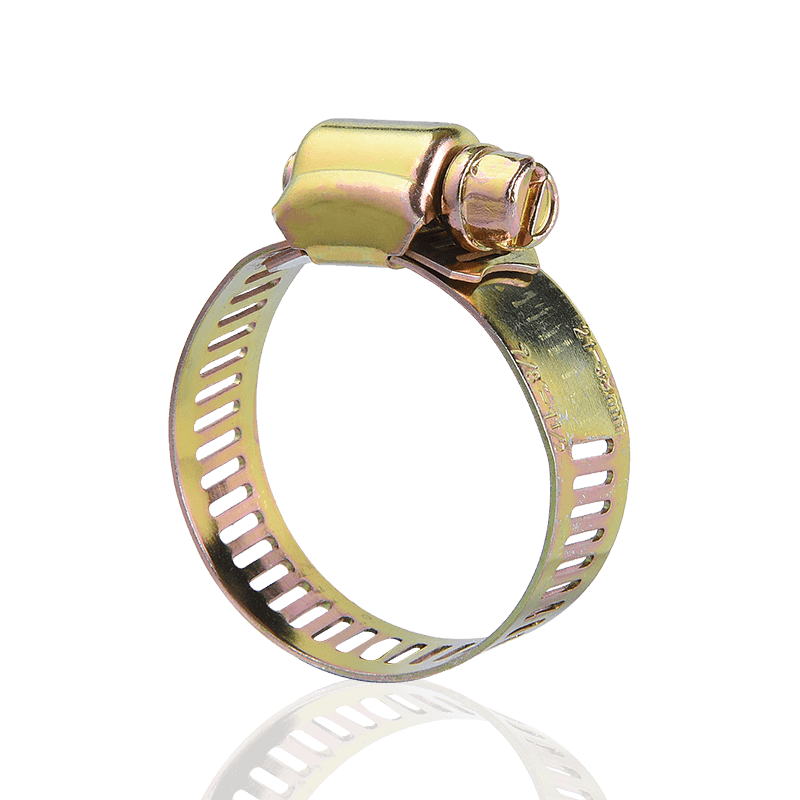
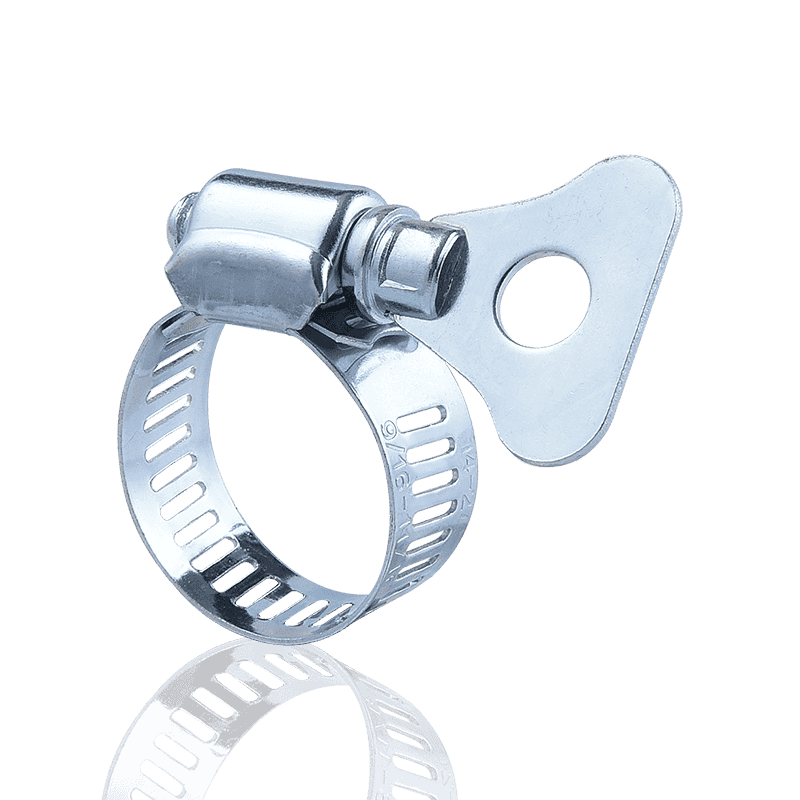
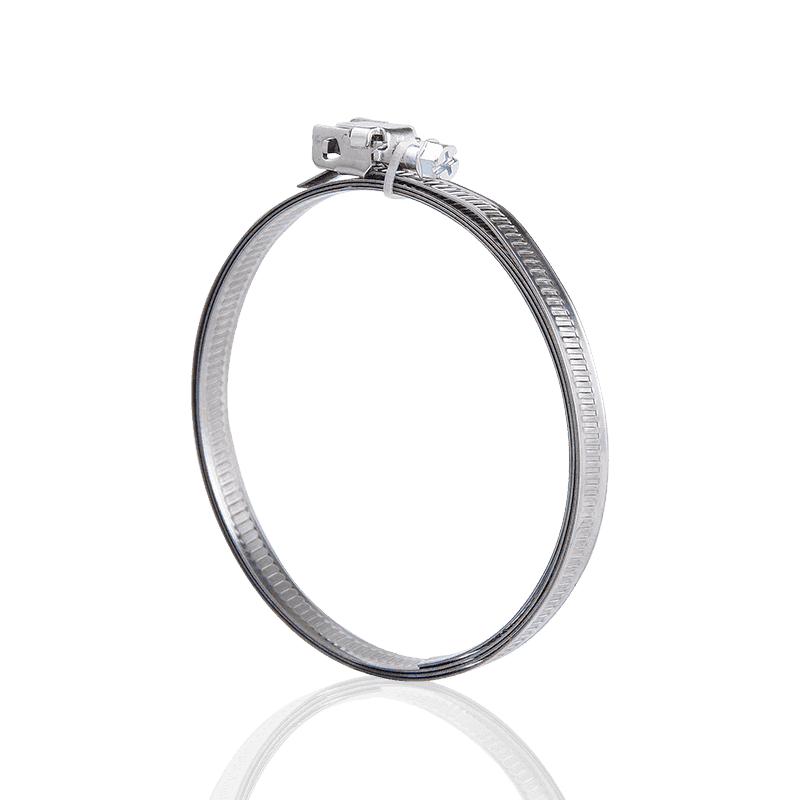

The company strives for excellence in every aspect of production, sales, and after-sales, ensuring customer satisfaction is the unchanging purpose of the enterprise!
Quick links
Product links
Contact Us
-
Address:222 Zhouhu Road, Zhouxiang Town, Cixi City, Zhejiang Province, China
-
Phone: +86-13736108443
-
Tel: +86-574-63441573
-
Fax: +86-574-63452355
-
E-mail: [email protected]
Copyright ©Cixi Hengtuo Hardware Co., Ltd. Rights Reserved. Wholesale Hose Clamp Manufacturer China Hose Clamp Factory
